WebP is the format Chrome and most modern websites use today — typically 25-35% smaller than JPEG at the same visual quality. The catch: it's a relatively new format, and a surprising number of business apps still throw "unsupported file type" errors when you drop a WebP into them. Word documents, government forms, vendor portals, even some print drivers will reject WebP outright but happily accept the same image as a PDF.
PDFly decodes the WebP using your browser's native image engine (every modern Chrome, Firefox, Edge, and Safari supports WebP) and embeds it into a PDF page. No server upload, no quality loss, no plug-ins to install.
- 1
Step 1 — Open the Convert tool
Open the Convert tool. The upload screen titled "Convert PDF" is where you drop the WebP file you want to wrap into a PDF.

- 2
Step 2 — Upload your WebP file
Click "Choose Files" and pick the WebP file you want to convert — or drop it onto the page. Upload more than one to bundle them all into a single PDF.

- 3
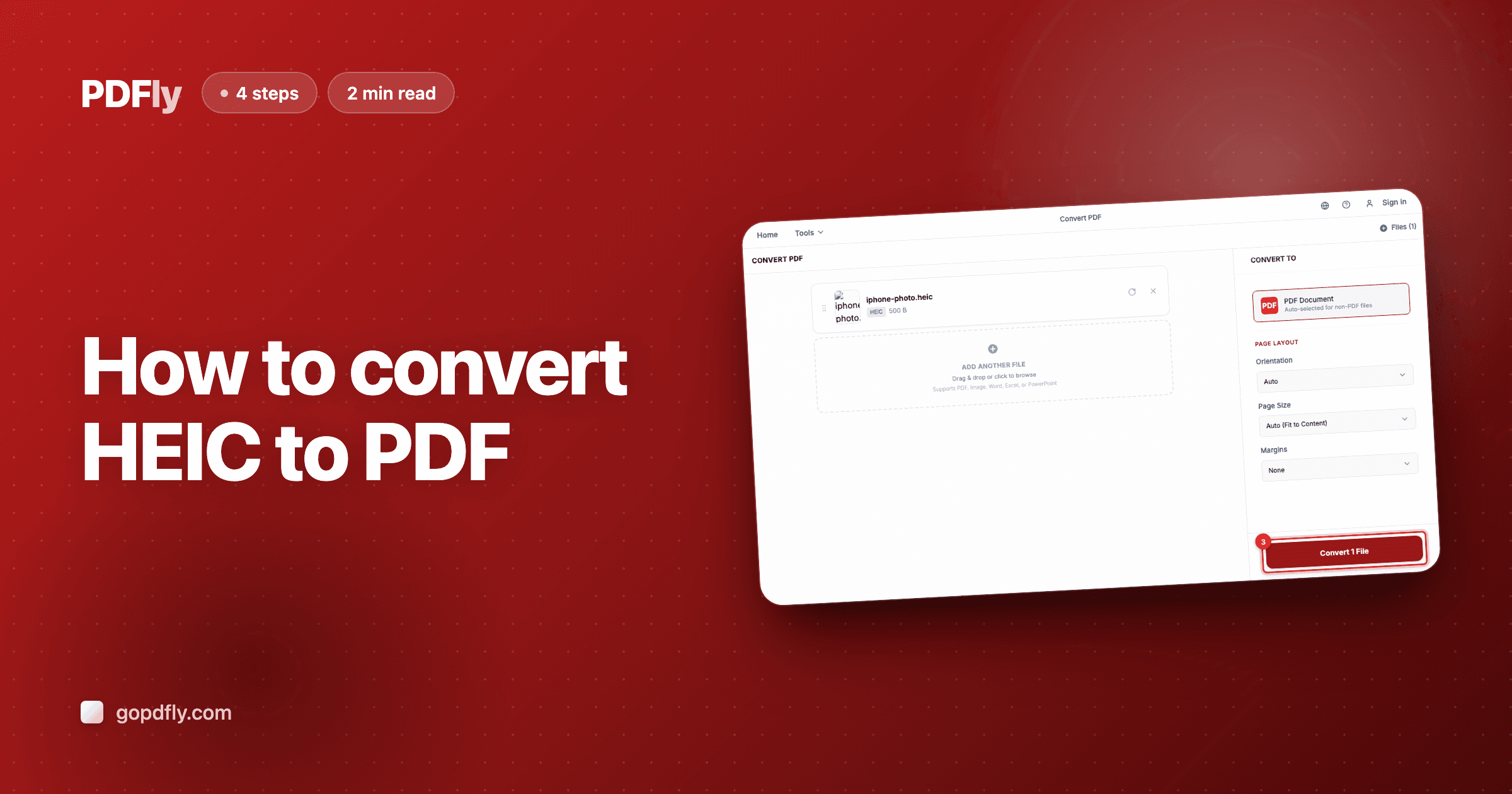
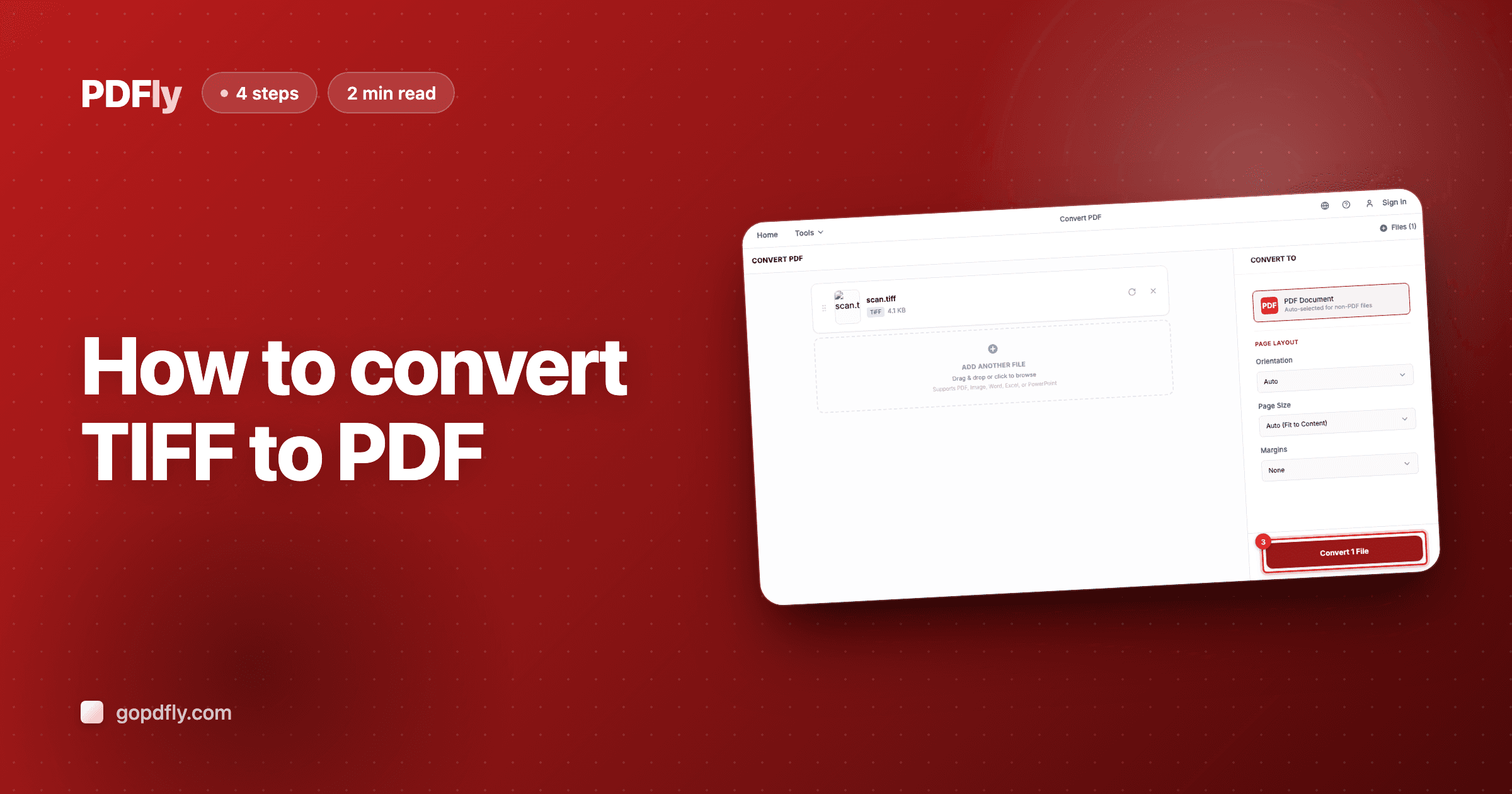
Step 3 — Run the conversion
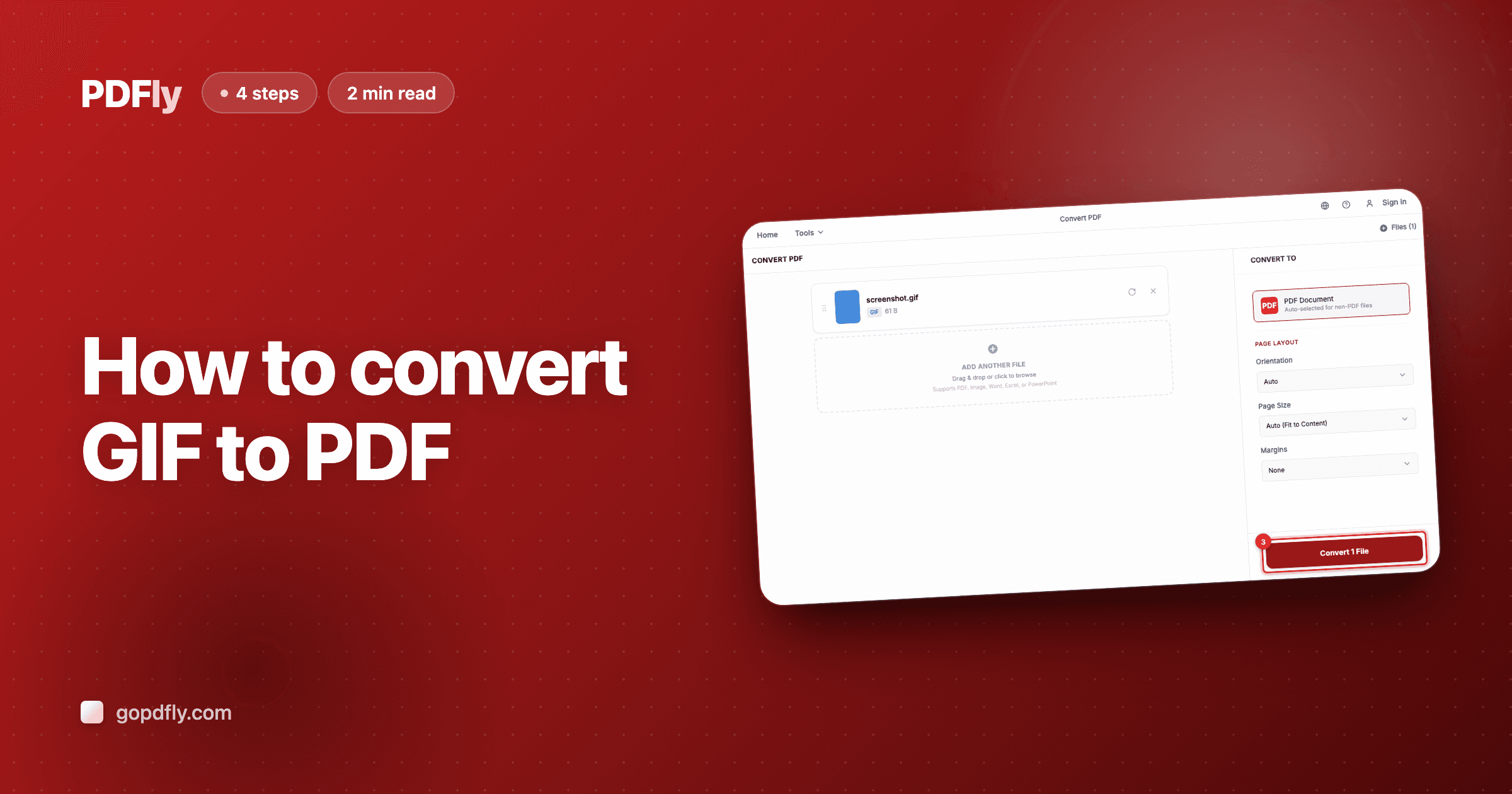
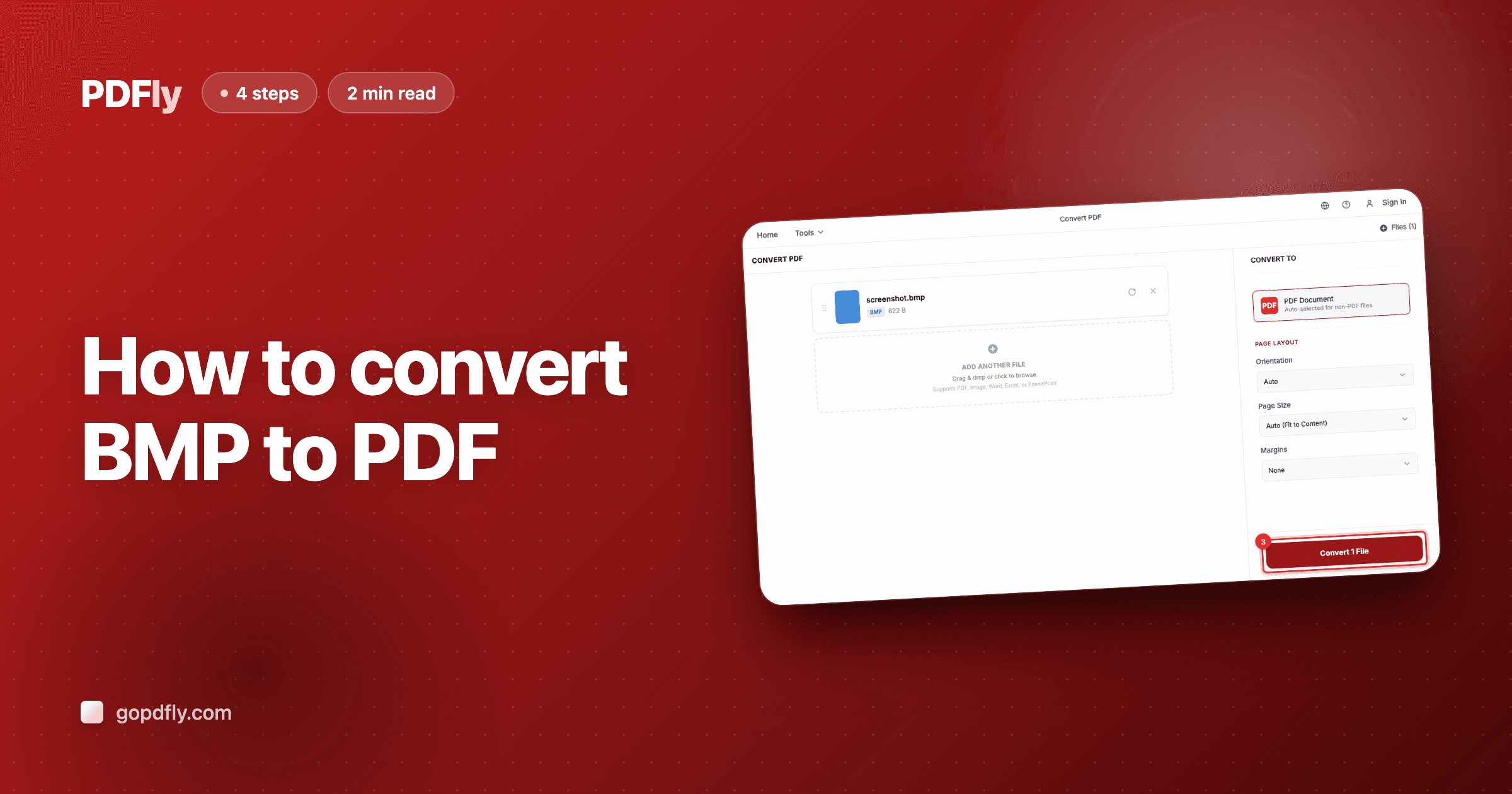
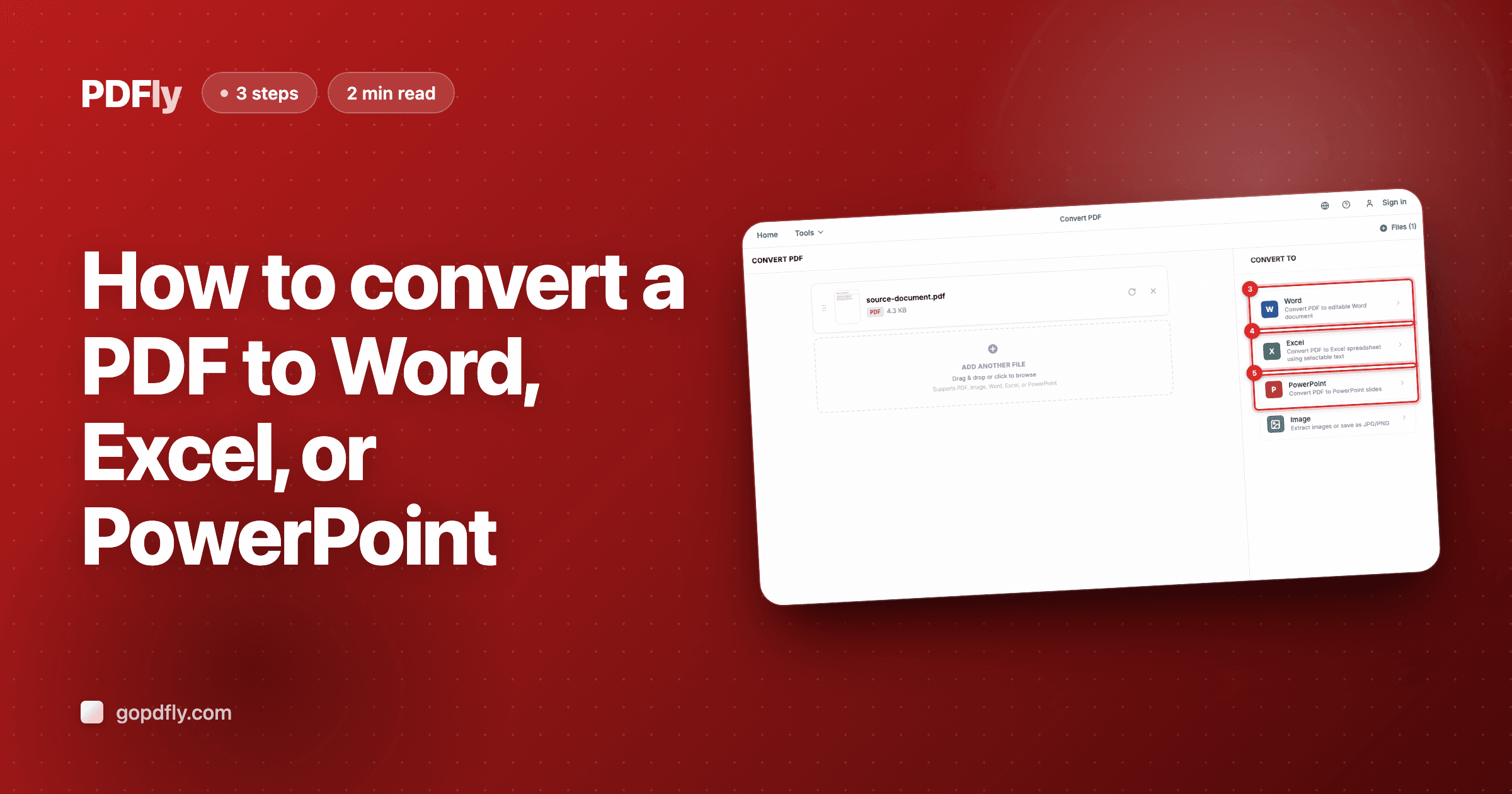
After your WebP file uploads, the sidebar shows PDF as the auto-selected output format. Click "Convert 1 File" to wrap it into a PDF page sized to match the original image.

- 4
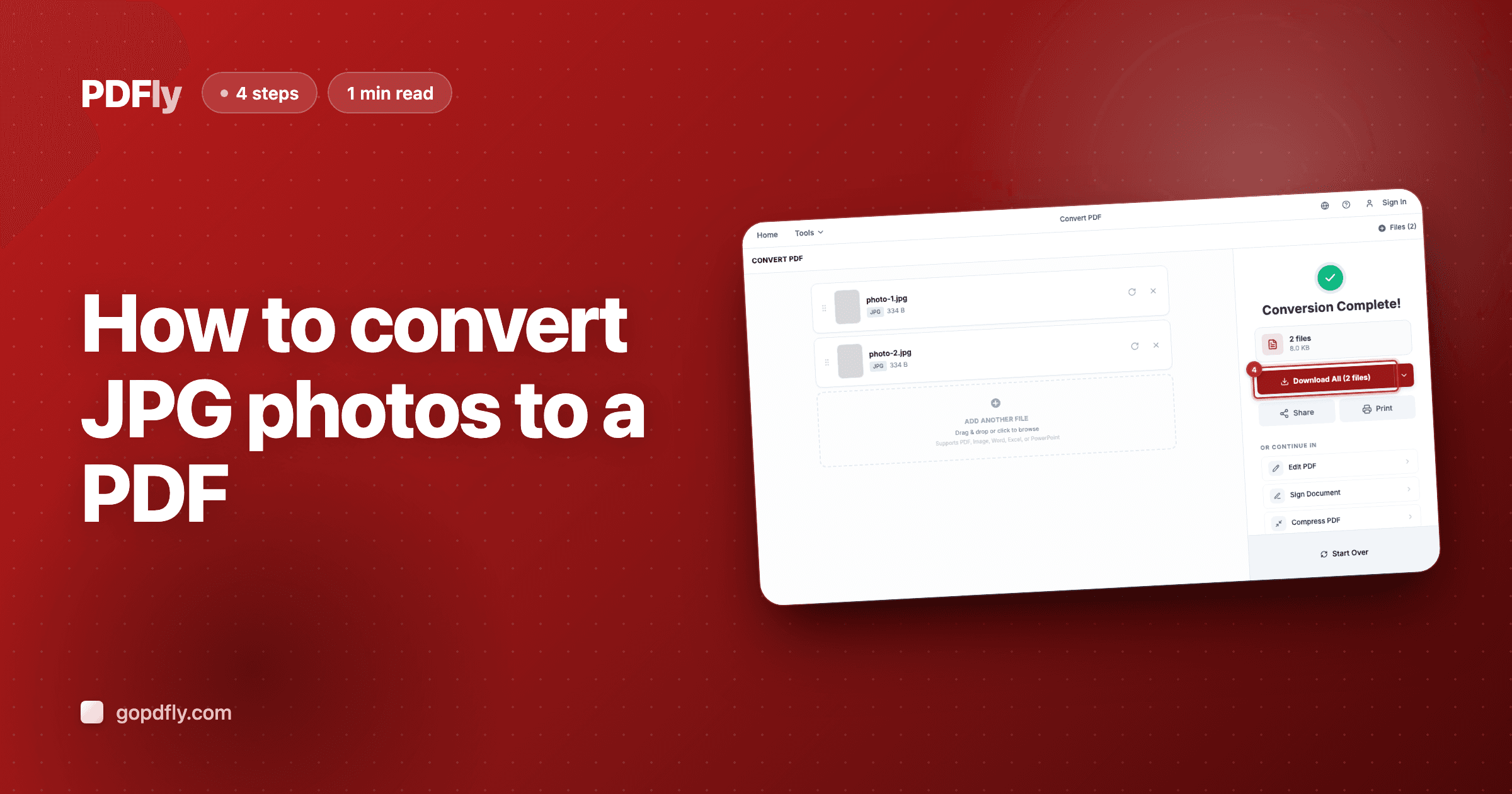
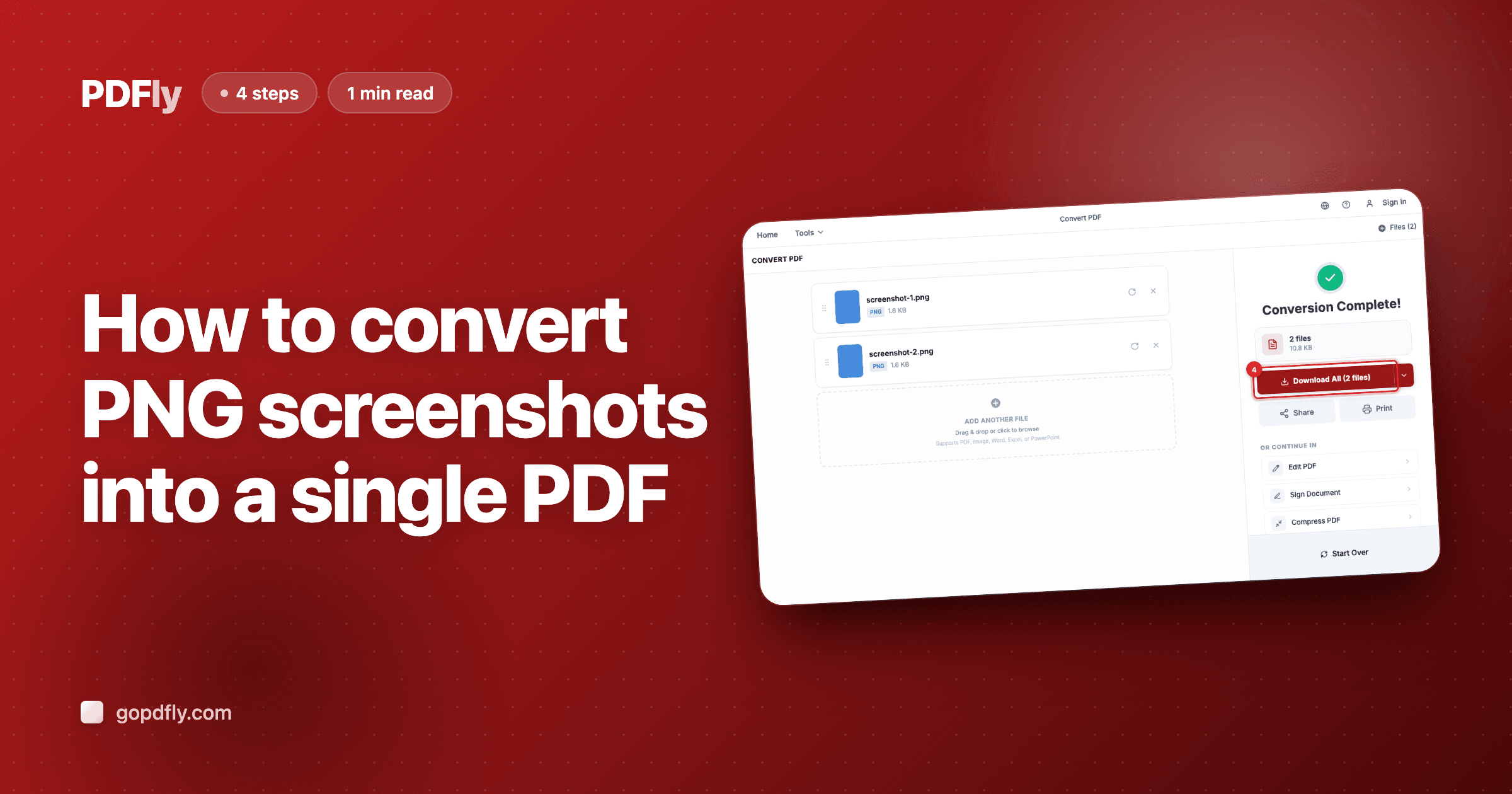
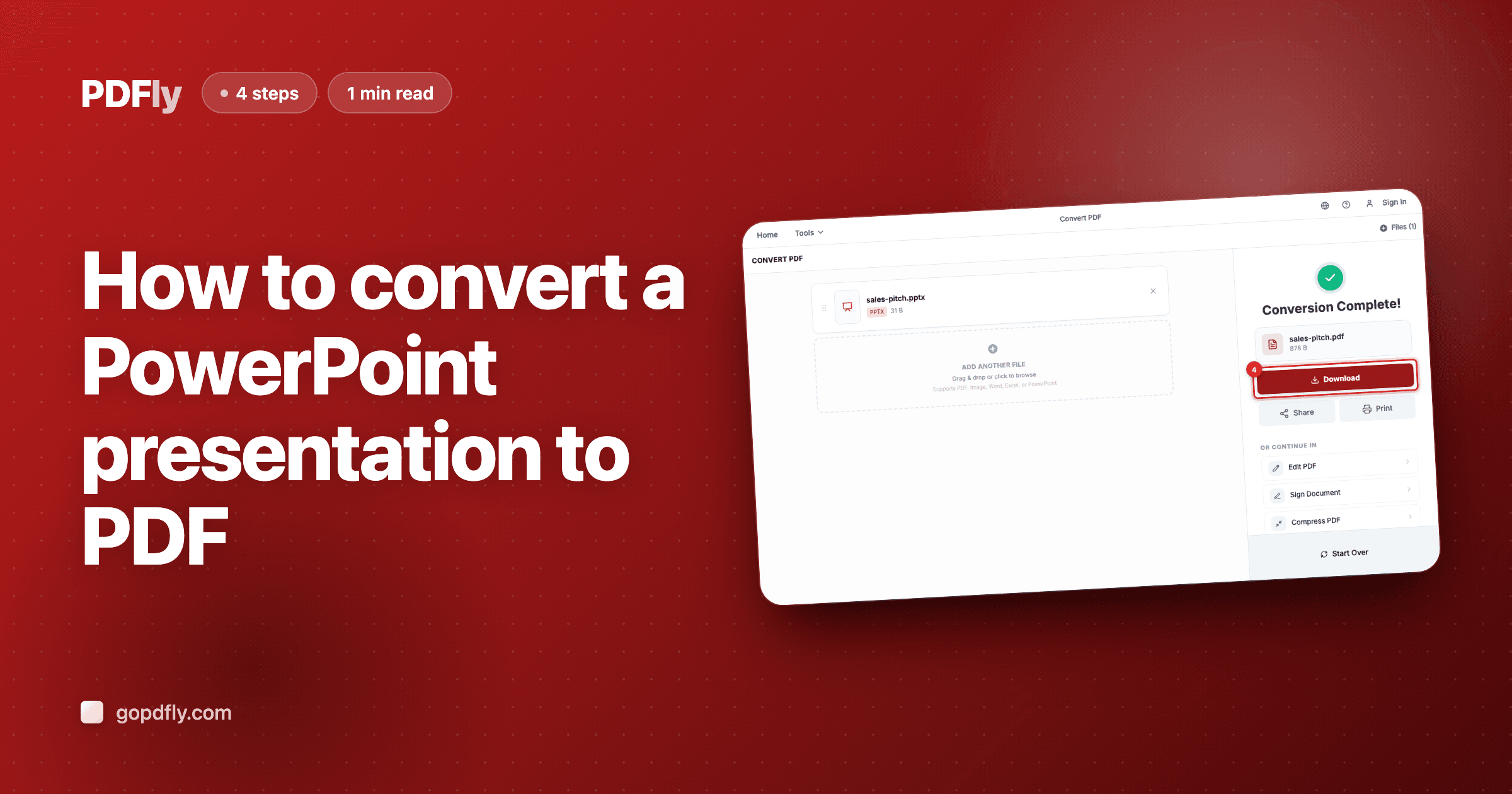
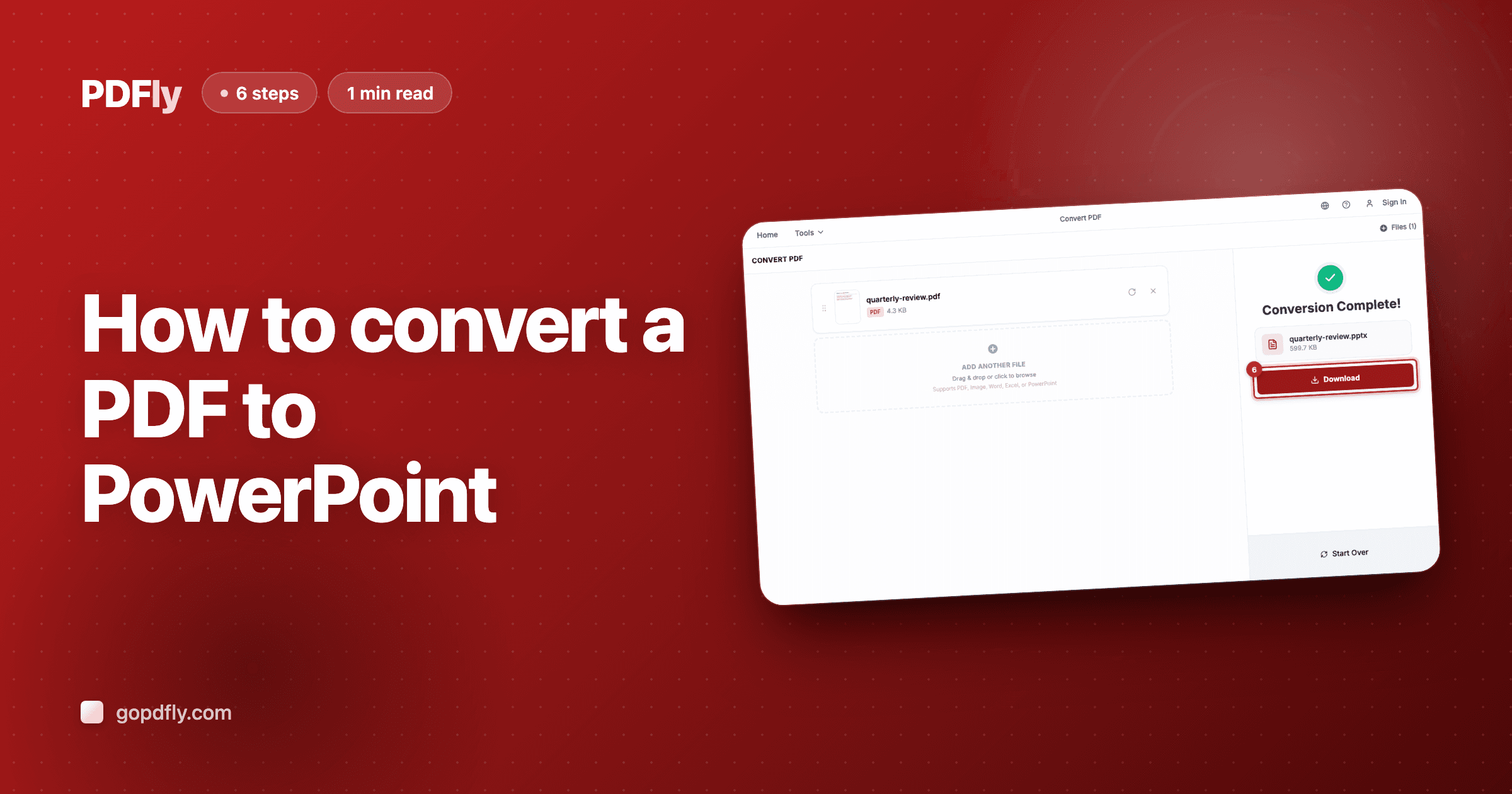
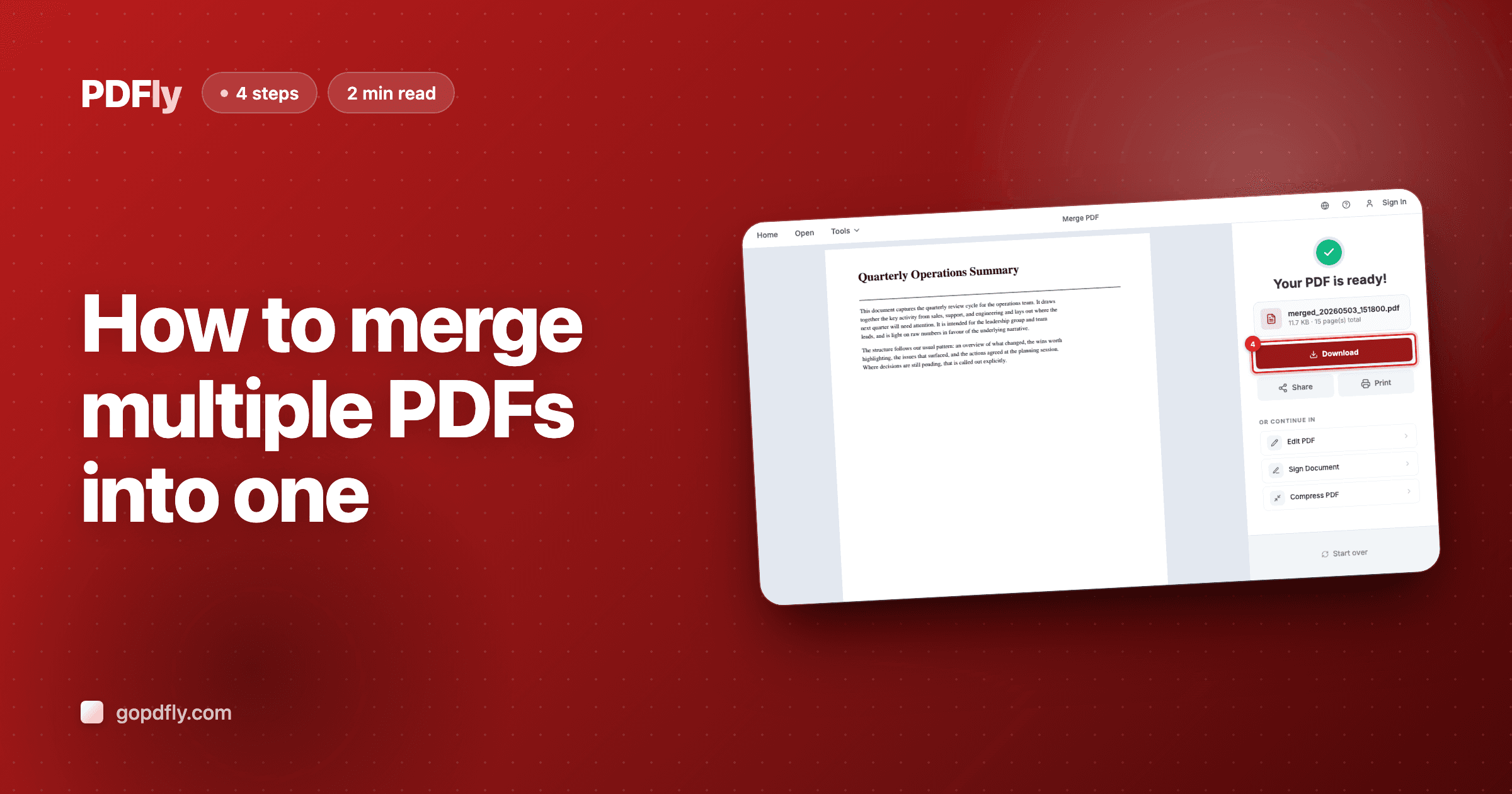
Step 4 — Download the PDF
When the conversion finishes, the result panel shows your new PDF with file name and size. Click "Download" to save it locally — your WebP image is now wrapped into a universally-readable document.