Most PDF-to-Excel work is people trying to recover numbers from a report — bank statements they need to reconcile, vendor invoices they want to total, a quarterly summary they want to chart. Re-typing rows by hand is tedious and error-prone.
PDFly does the lift in your browser. Free "Extract data only" mode reads the text layer and lays it out as rows you can clean up in Excel — perfect for simple tabular PDFs. The Premium "Preserve table formatting" mode runs a server-side pass that recovers cell borders, merged headers, and number formats — worth it when the source PDF has complex tables you want to keep visually intact.
- 1
Step 1 — Open the Convert tool
Open the Convert tool. You'll see the upload screen titled "Convert PDF".

- 2
Step 2 — Upload your PDF
Click "Choose Files" and pick the PDF that contains the table or numbers you want in Excel — or drag it onto the page. Bank statements, invoices, financial reports, expense exports all work.

- 3
Step 3 — Pick the Excel format
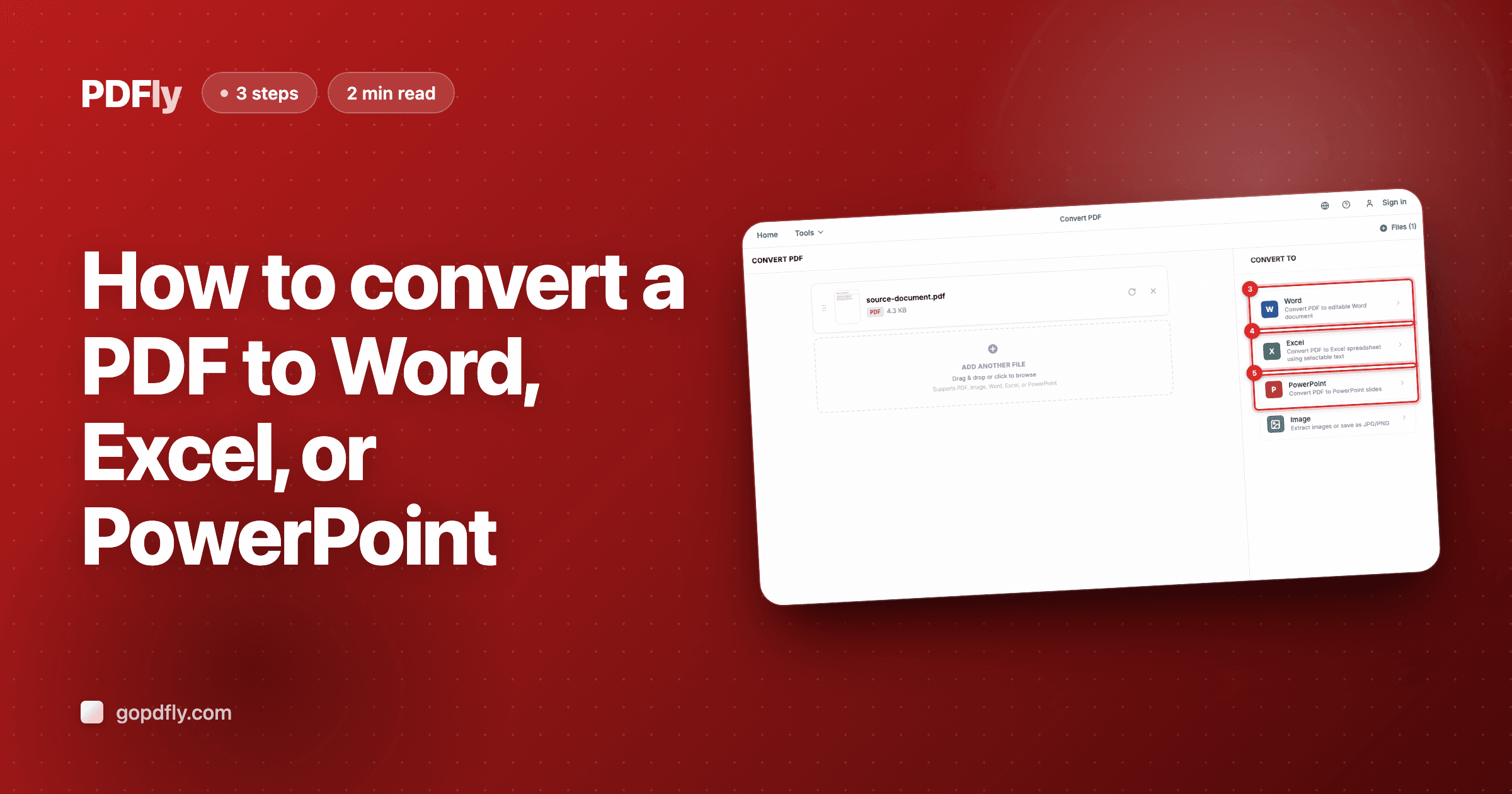
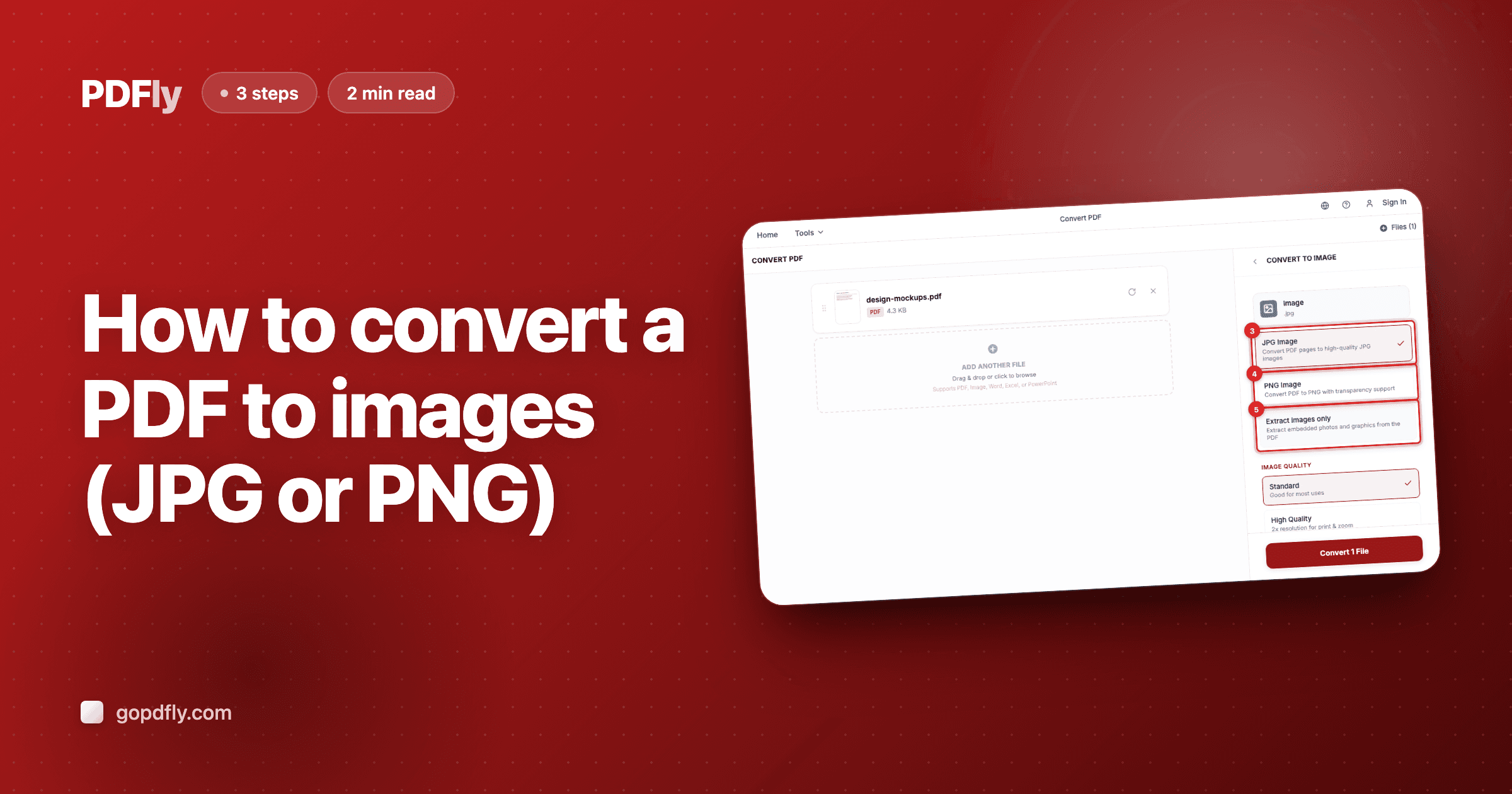
In the sidebar, click the "Excel" format. PDFly will reveal two output modes: a free "Extract data only" extraction and a Premium "Preserve table formatting" pass.

- 4
Step 4 — Choose a conversion mode
"Extract data only" reads the PDF's text layer and lays it out as rows in a single sheet — fast, no formatting, ideal for further analysis. "Preserve table formatting" runs a server-side pass that recovers cell borders, merged cells, and number formats. Pick whichever fits your workflow.

- 5
Step 5 — Run the conversion
Click the convert button at the bottom of the sidebar. PDFly walks the PDF's text layer, splits it into rows by column delimiter, and packages the result as a single .xlsx — usually a few seconds for a typical document.

- 6
Step 6 — Download the Excel file
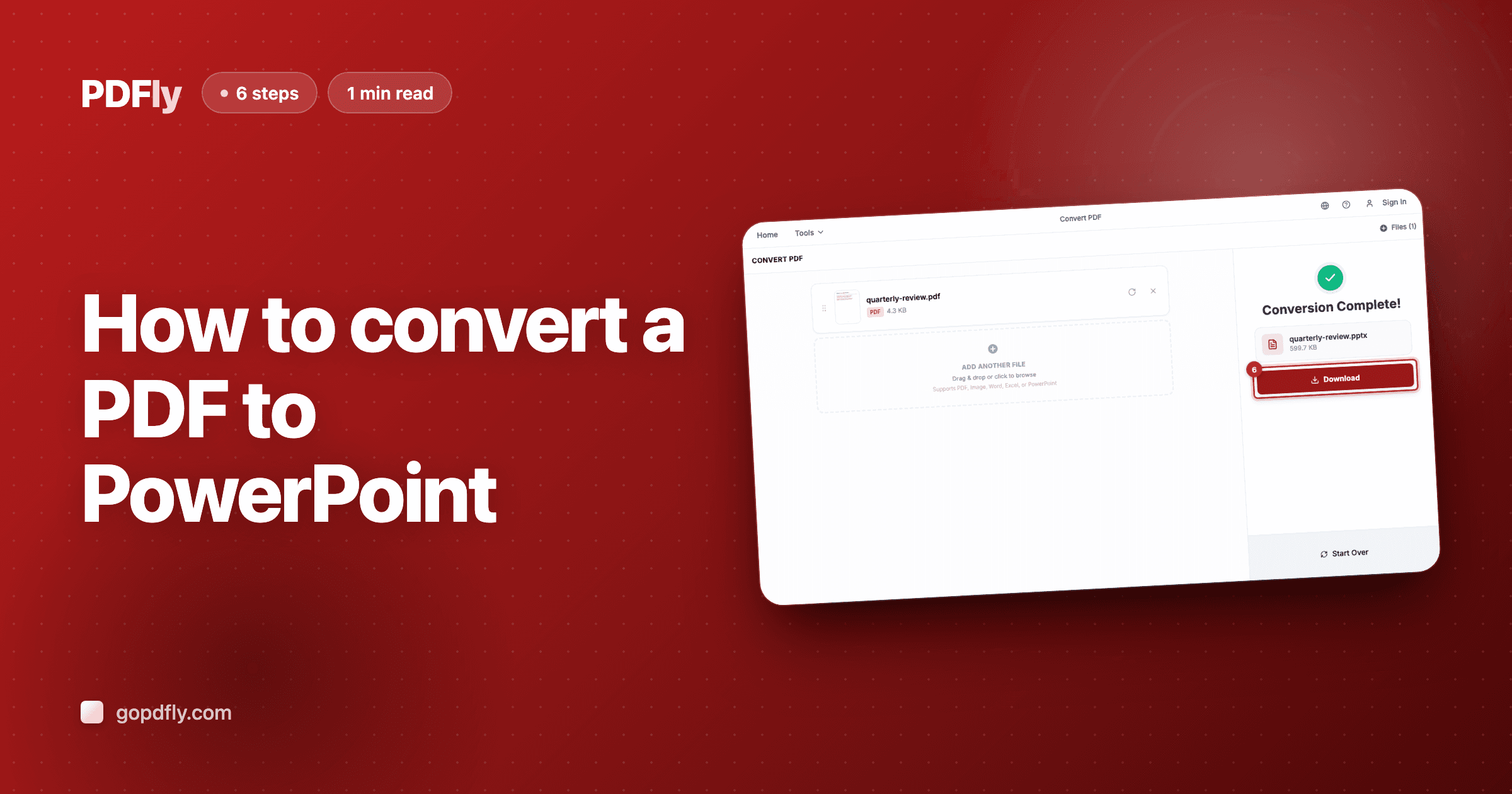
When the conversion finishes, the result panel shows the new .xlsx with its file name and size. Click "Download" to save it locally — open it directly in Excel, Numbers, or Google Sheets.