GIF is the oldest of the modern image formats — born in 1987 and still going strong for static screenshots, simple icons, and the occasional reaction image. Most professional documents prefer PDF as the wrapper for embedded images: it preserves the resolution exactly, scales cleanly when printed, and avoids the "image type unsupported" rejection that GIFs sometimes hit on government portals or older corporate intake systems.
PDFly uses your browser's native GIF decoder (the same one that displays GIFs on web pages) and embeds the first frame into a PDF page. Animated GIFs become single-page PDFs of frame one — PDF doesn't support animation natively. The conversion runs entirely in your browser.
- 1
Step 1 — Open the Convert tool
Open the Convert tool. The upload screen titled "Convert PDF" is where you drop the GIF file you want to wrap into a PDF.

- 2
Step 2 — Upload your GIF file
Click "Choose Files" and pick the GIF file you want to convert — or drop it onto the page. Upload more than one to bundle them all into a single PDF.

- 3
Step 3 — Run the conversion
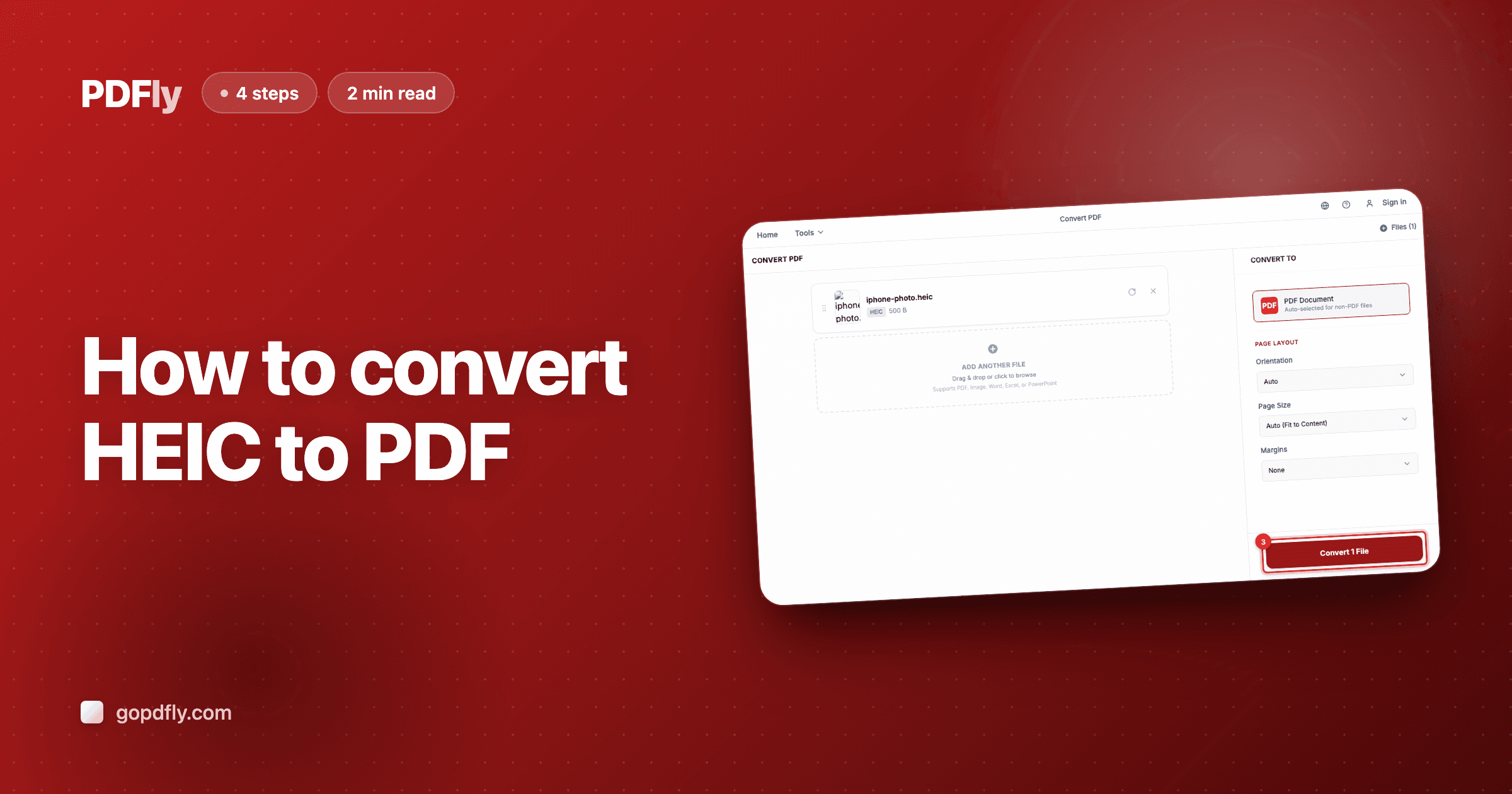
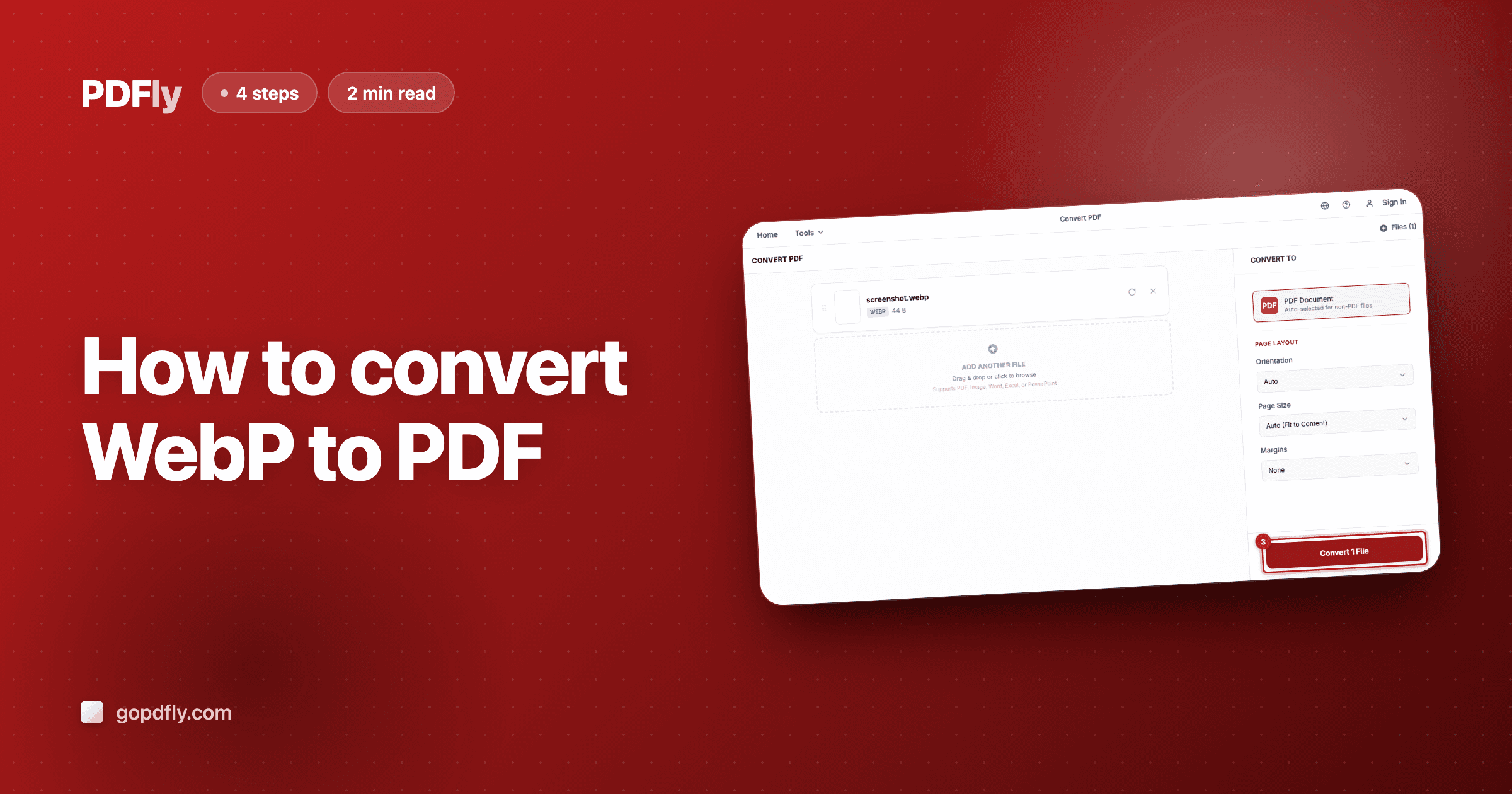
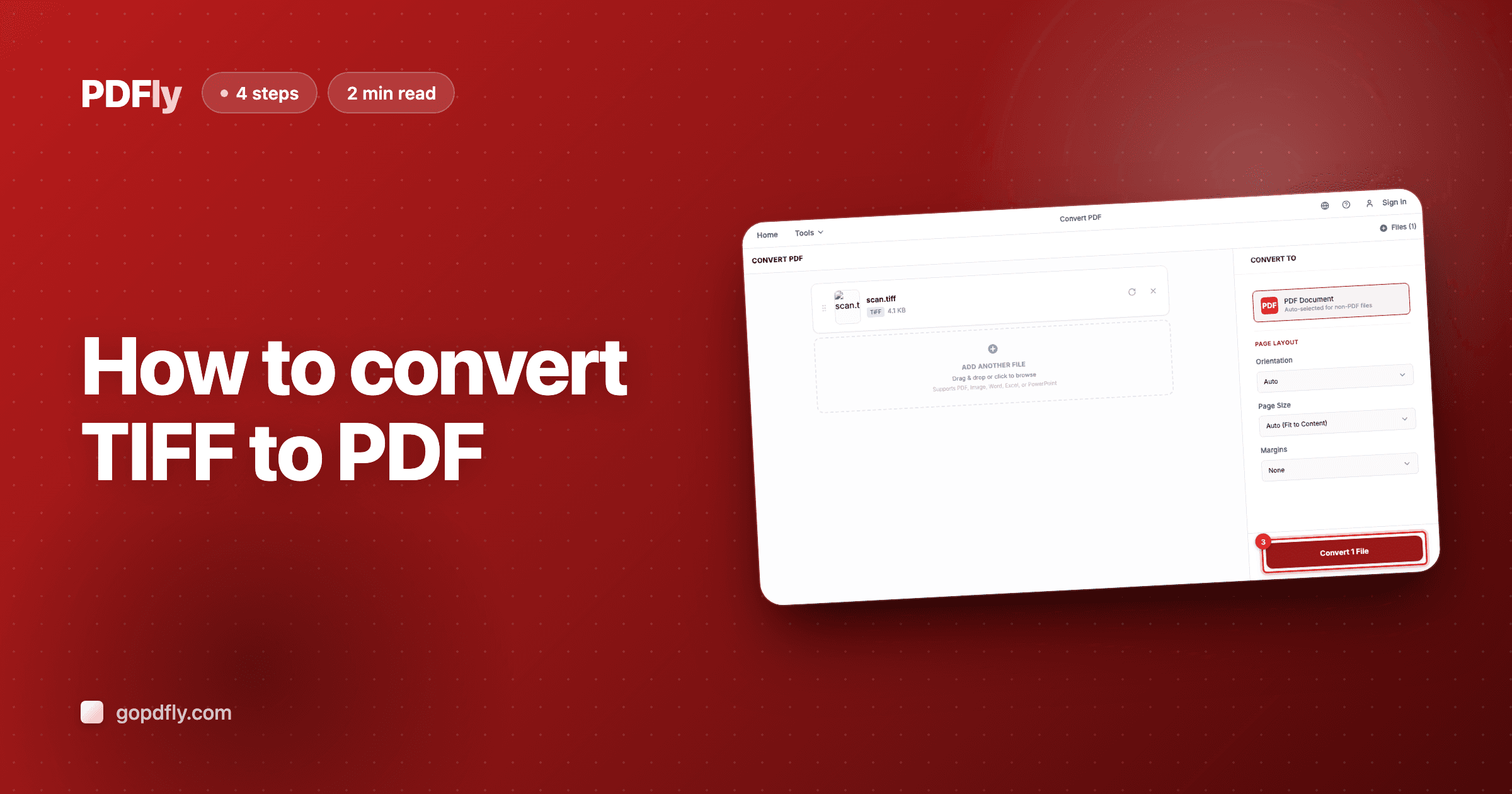
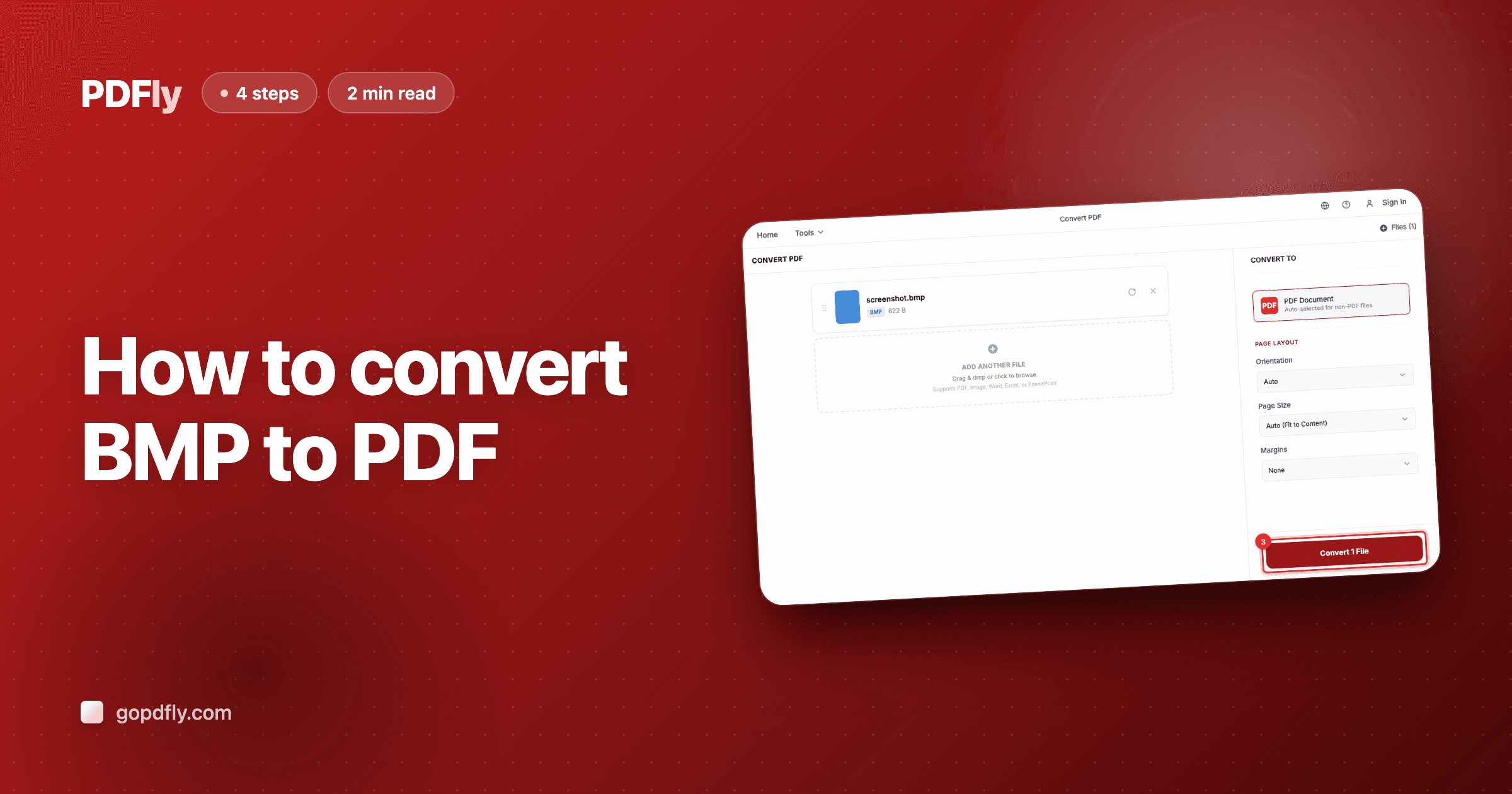
After your GIF file uploads, the sidebar shows PDF as the auto-selected output format. Click "Convert 1 File" to wrap it into a PDF page sized to match the original image.

- 4
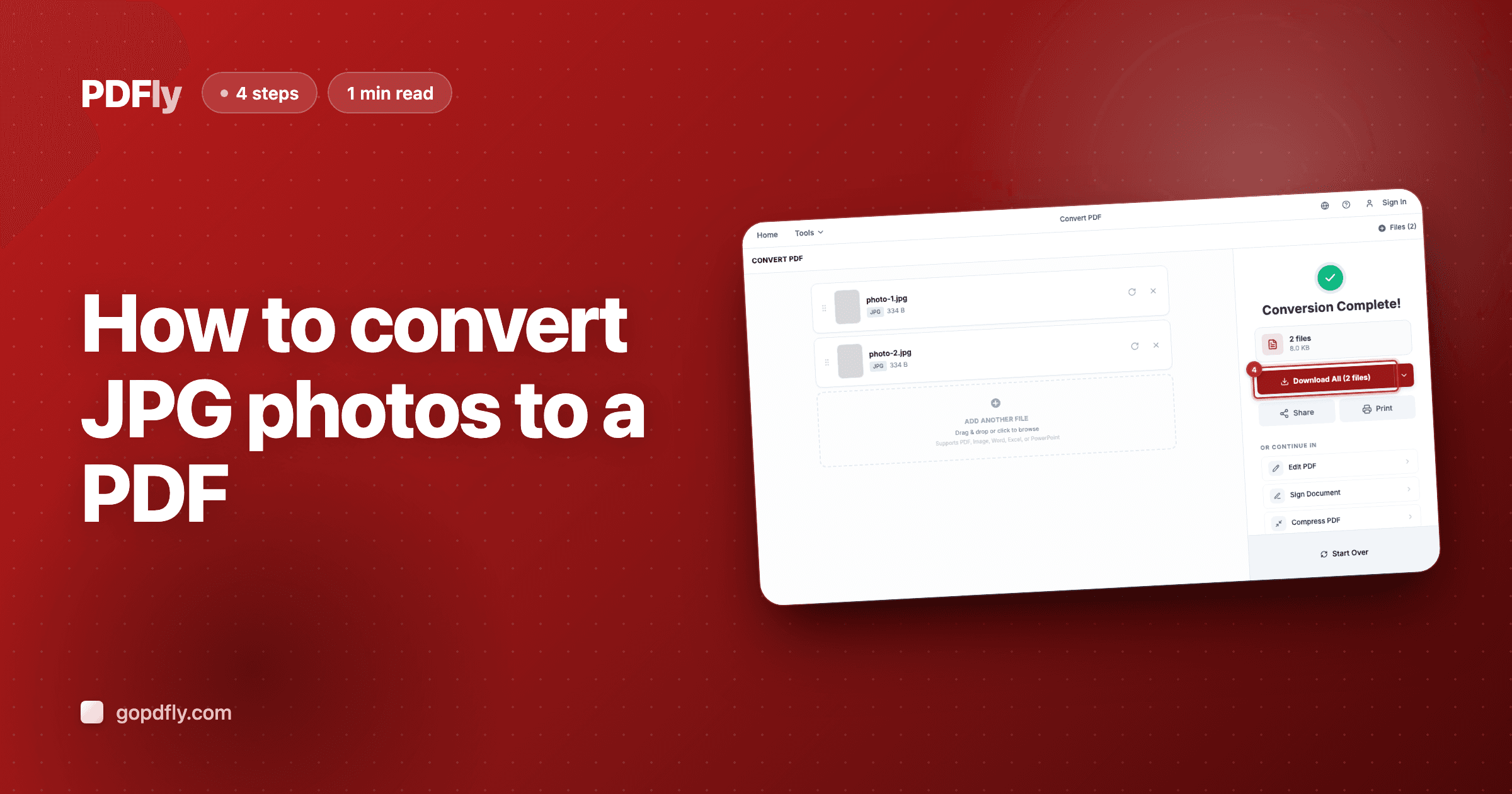
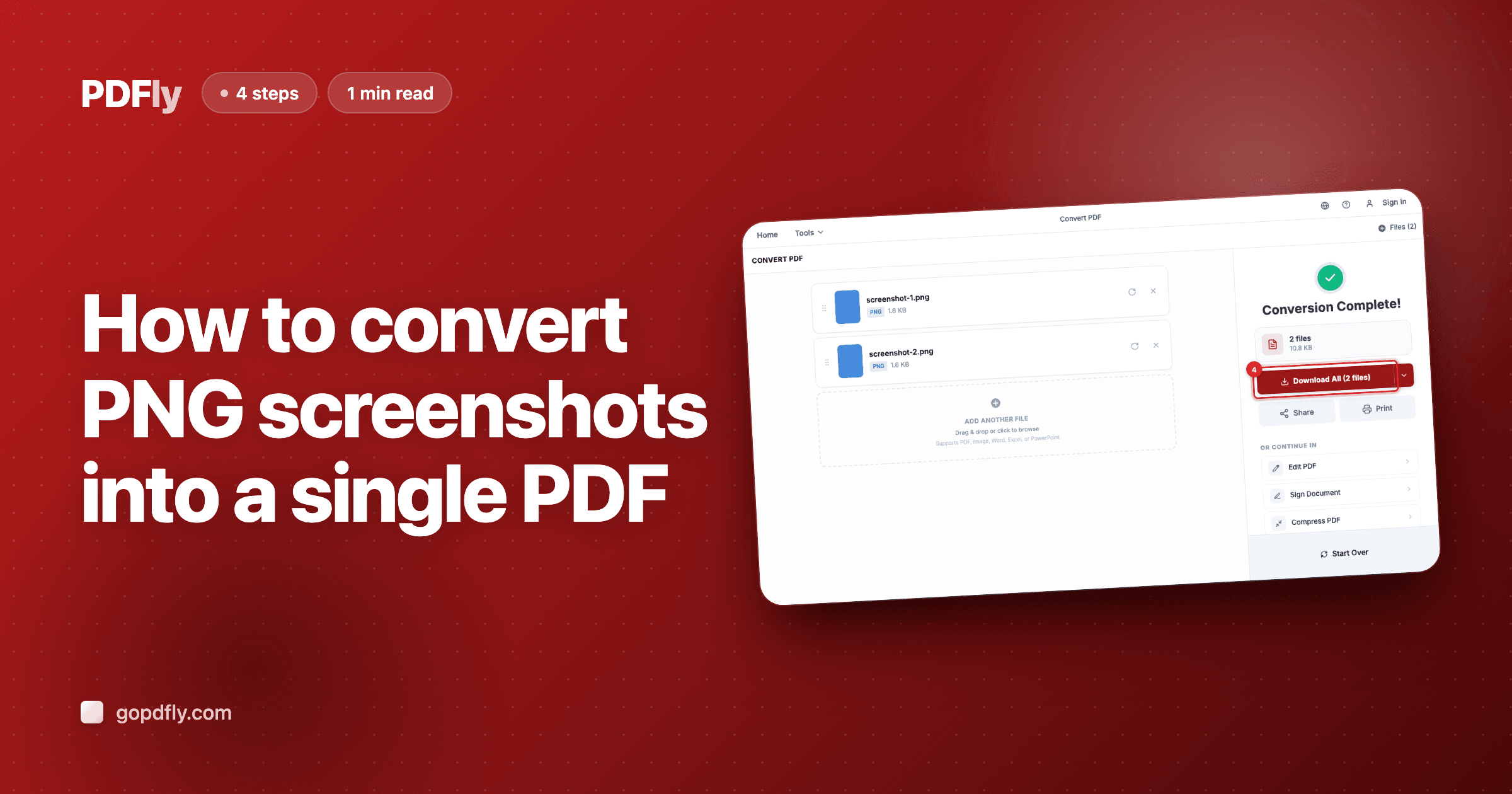
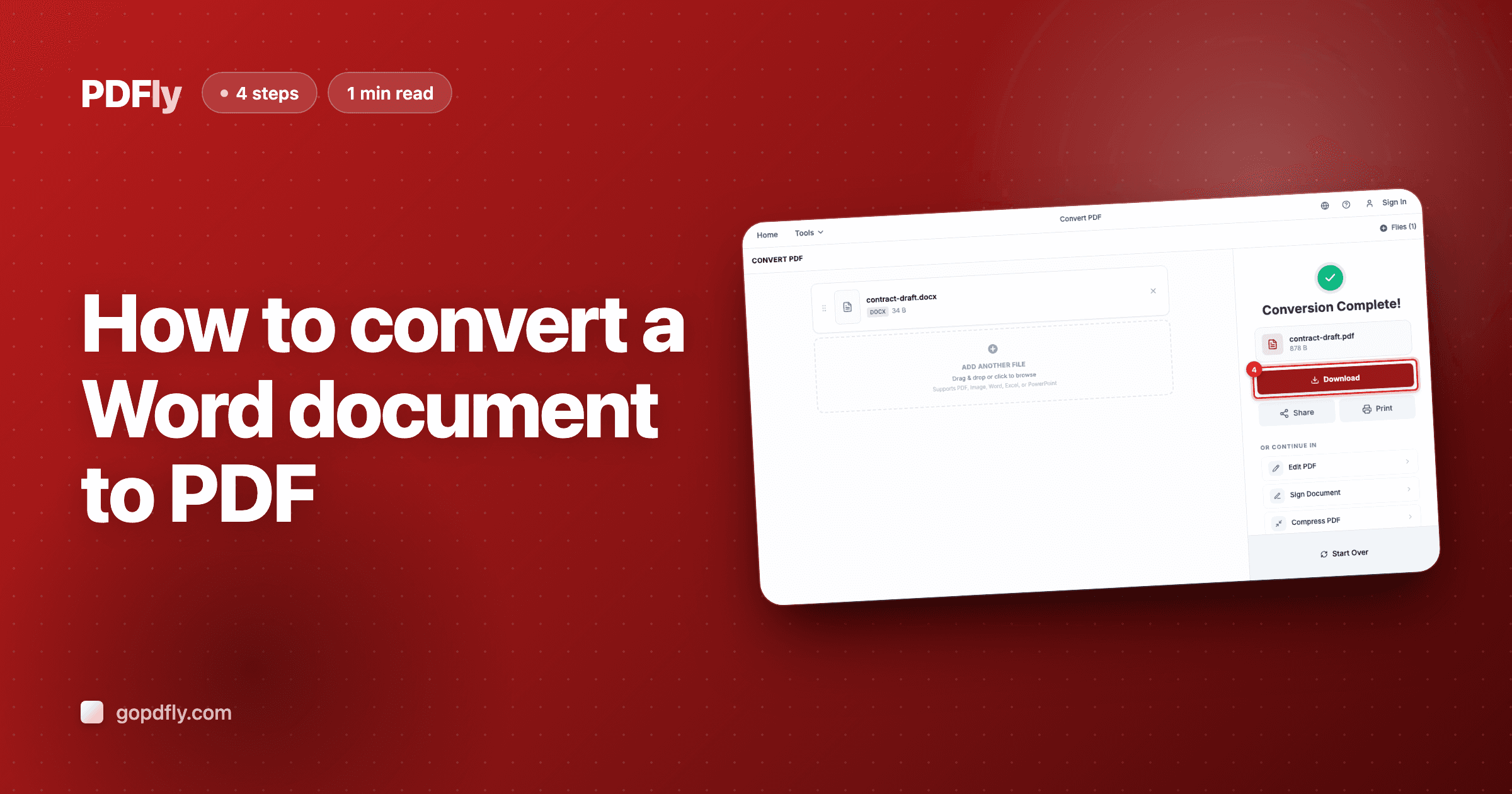
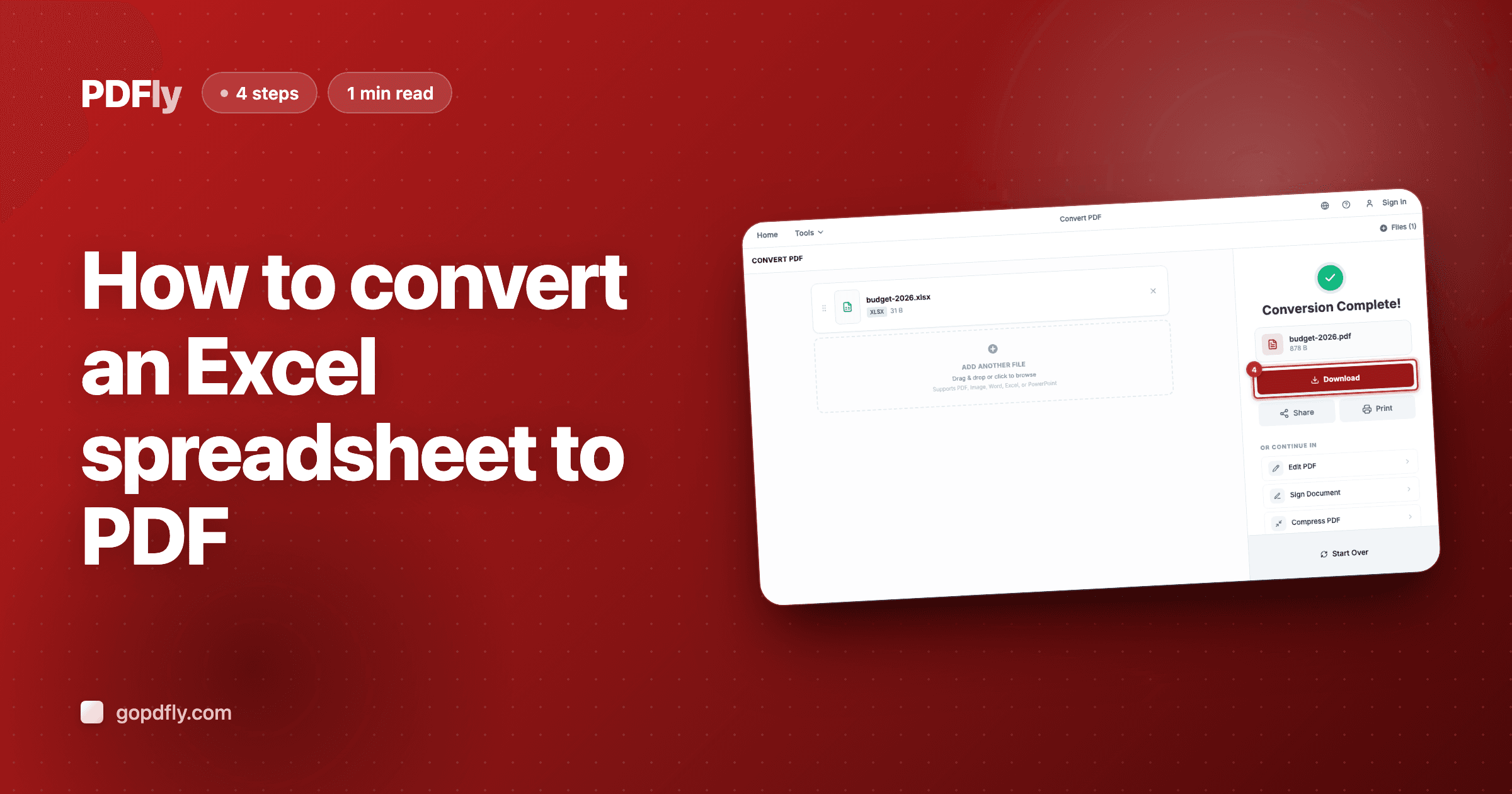
Step 4 — Download the PDF
When the conversion finishes, the result panel shows your new PDF with file name and size. Click "Download" to save it locally — your GIF image is now wrapped into a universally-readable document.