If you've ever needed to send a contract assembled from several Word files, or hand a colleague one PDF instead of a folder of attachments, this is the workflow you want.
PDFly converts each Word document and stitches them together in the right order, so you end up with a single PDF that opens the same way for everyone — no formatting drift, no missing fonts, no Word required on the other end.
Converting Word documents to PDF requires a PDFly Premium subscription.
- 1
Step 1 — Open the Convert tool
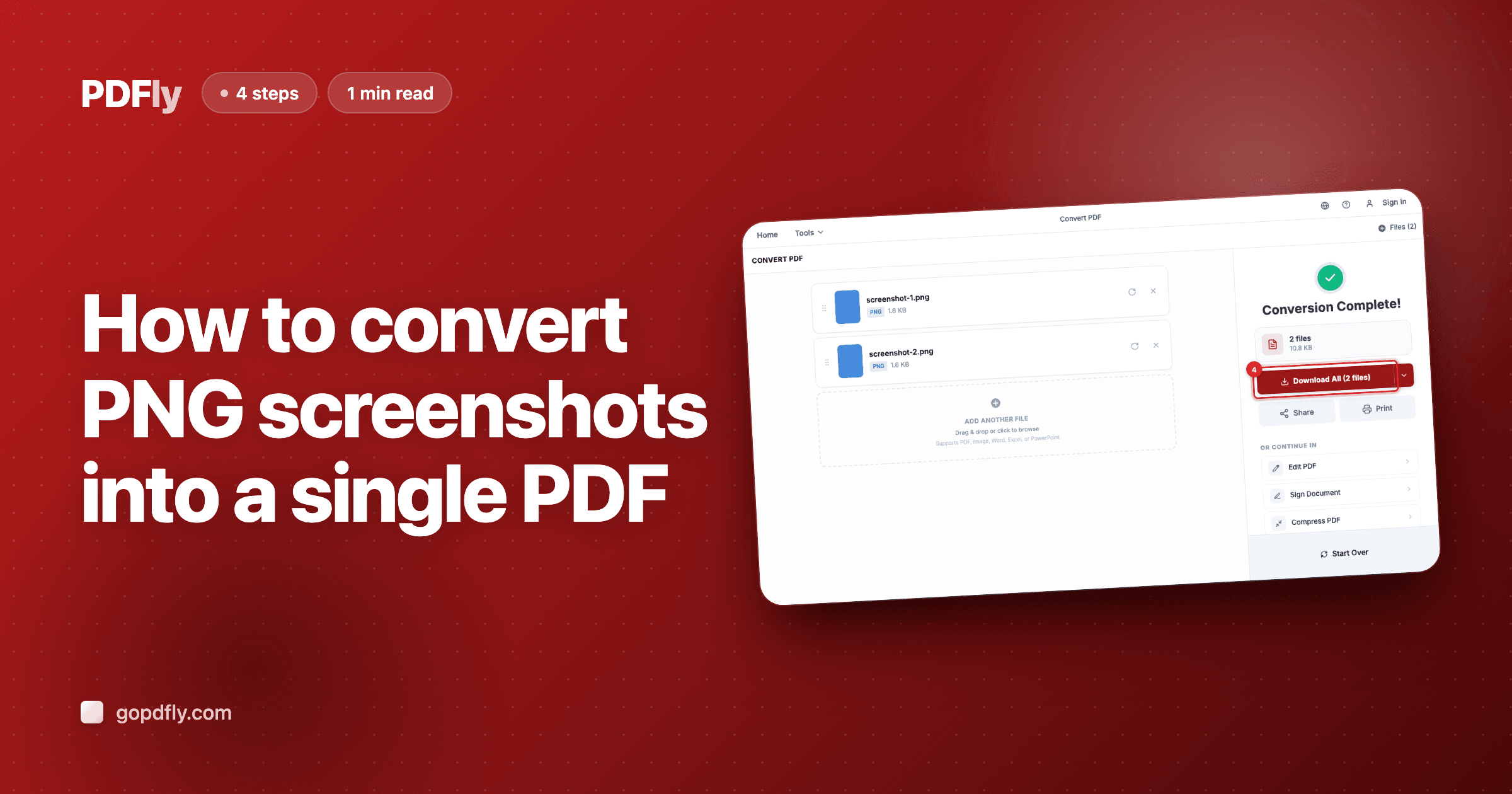
Open the Convert tool. You'll see the upload screen titled "Convert PDF Files".

- 2
Step 2 — Upload your Word documents
Click "Choose Files" and select two or more Word documents (.doc or .docx). You can also drag them straight onto the page.

- 3
Step 3 — Enable "Merge into one PDF"
In the conversion settings, enable the "Merge into one PDF" toggle. This tells PDFly to combine all files into a single output document instead of producing one PDF per file.

- 4
Step 4 — Run the conversion
Click the "Convert 2 Files" button. PDFly will convert each Word document and merge them into a single PDF — this usually takes a few seconds.

- 5
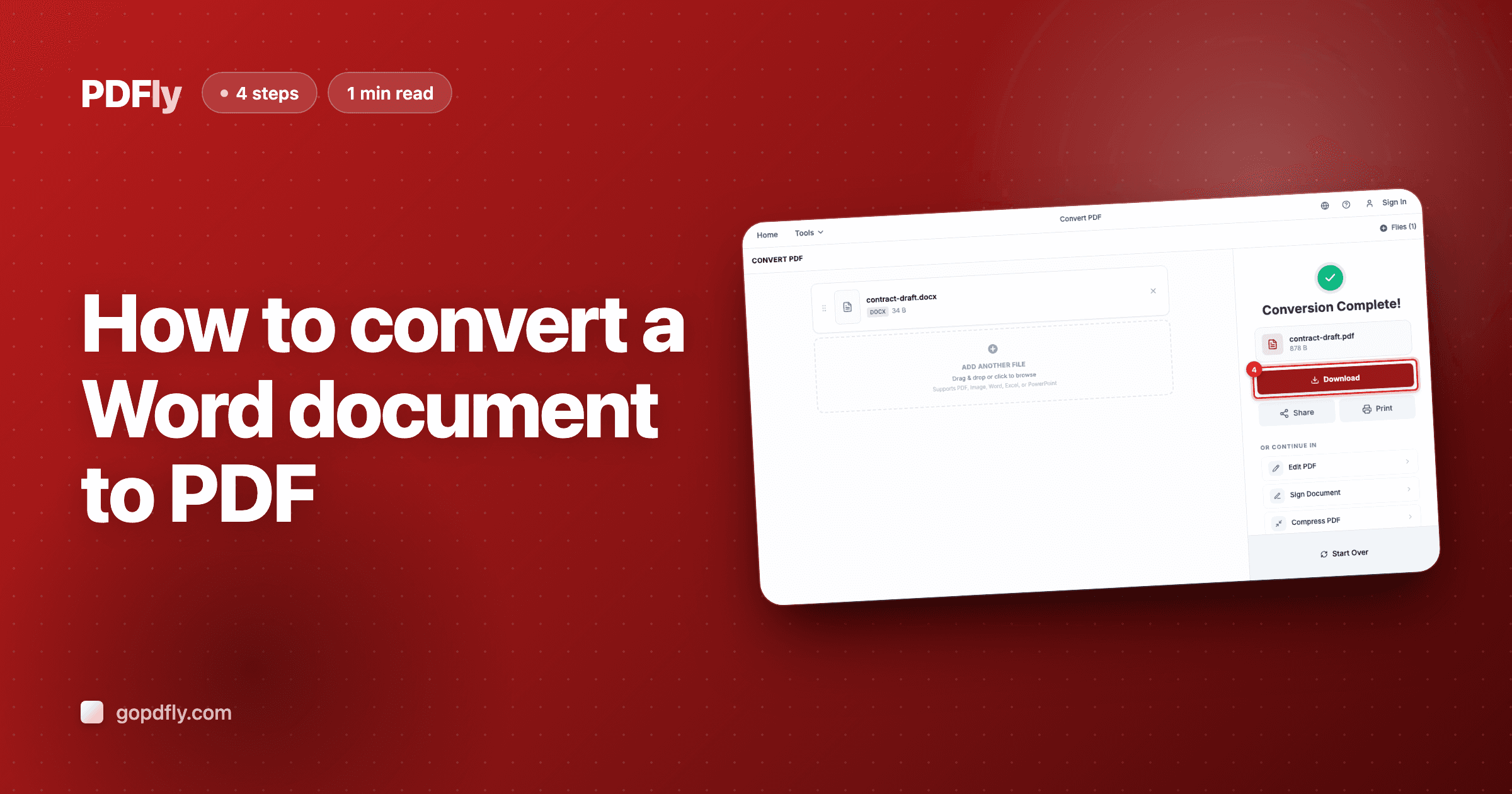
Step 5 — Download the merged PDF
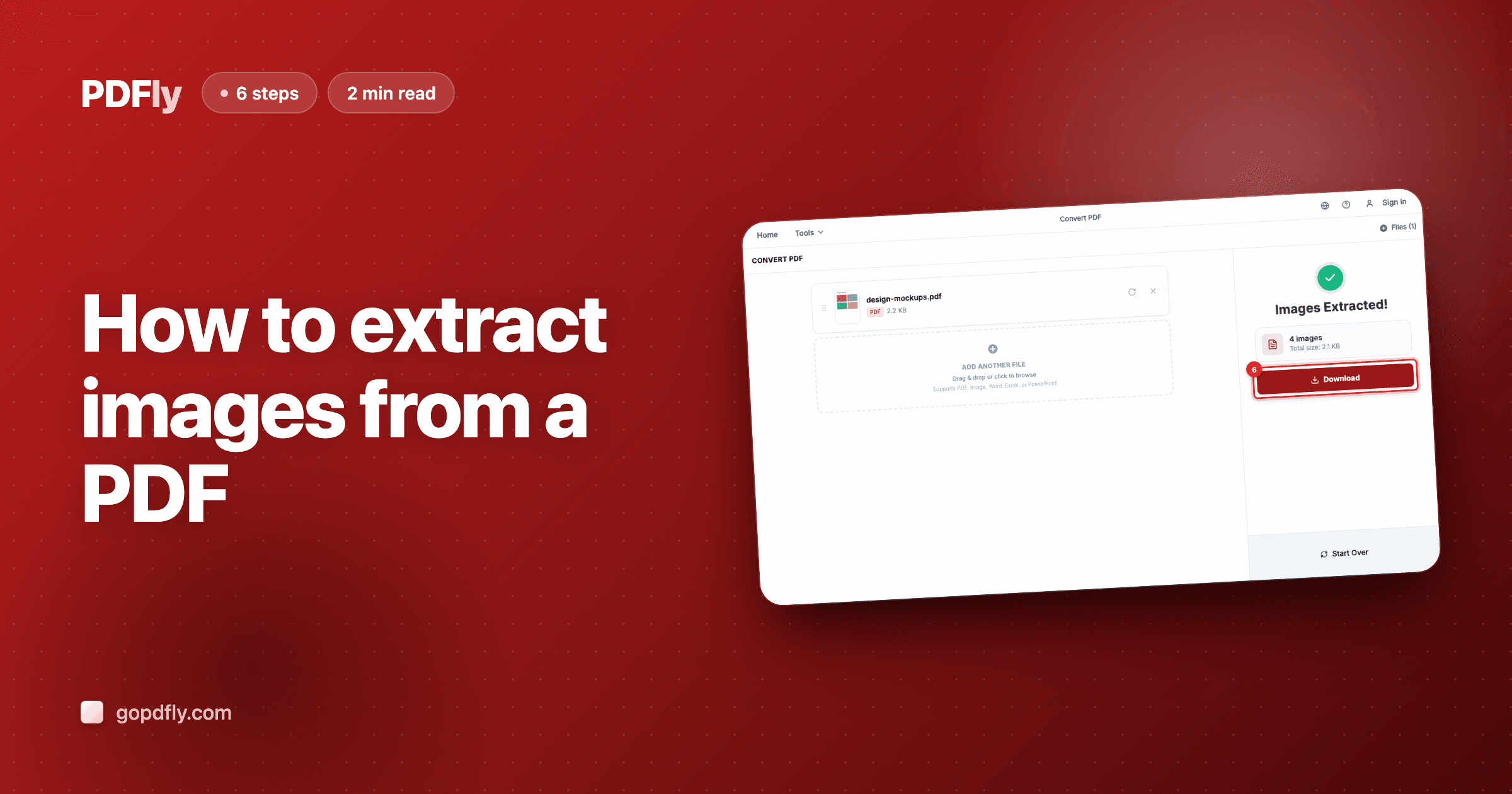
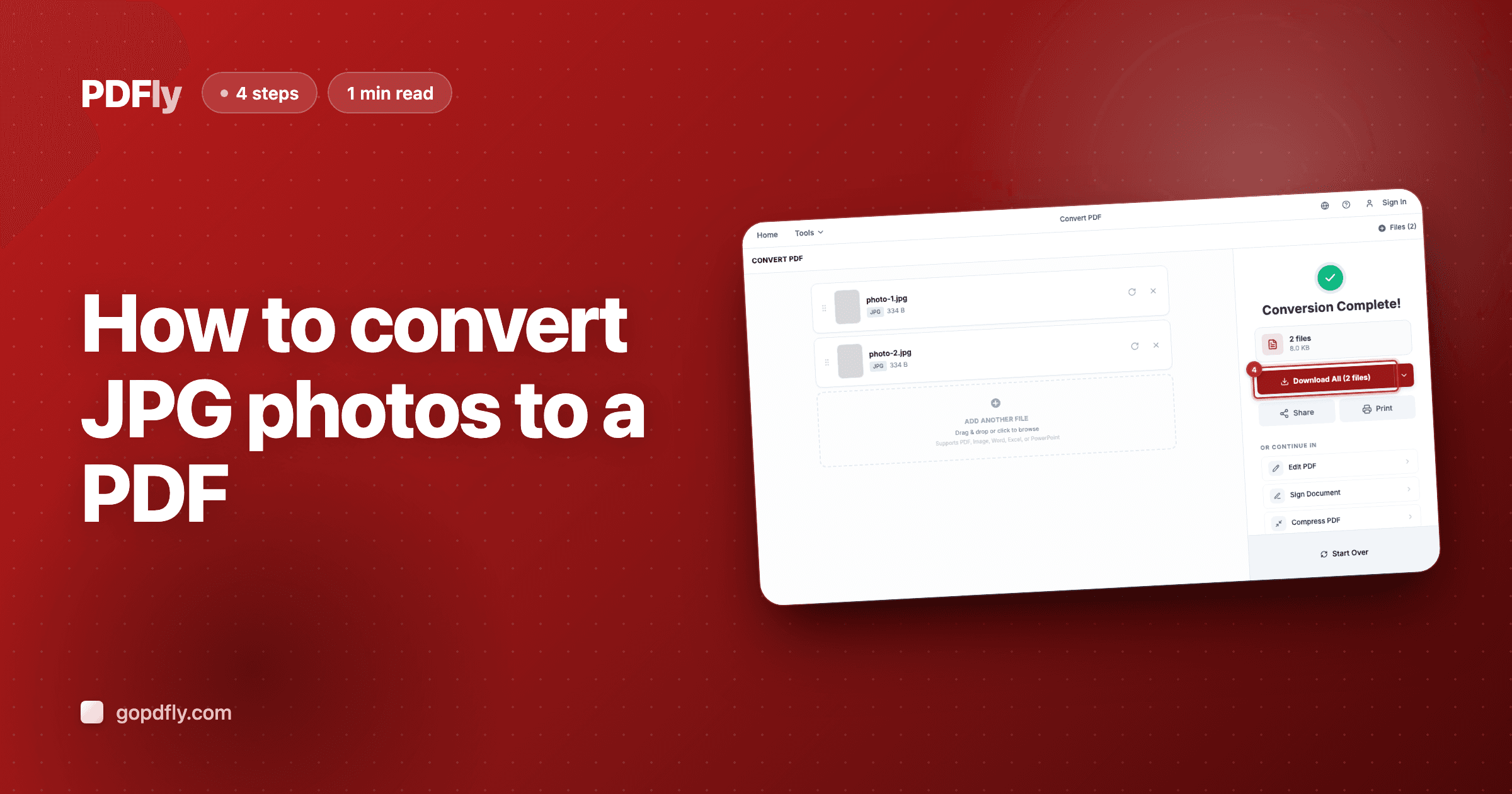
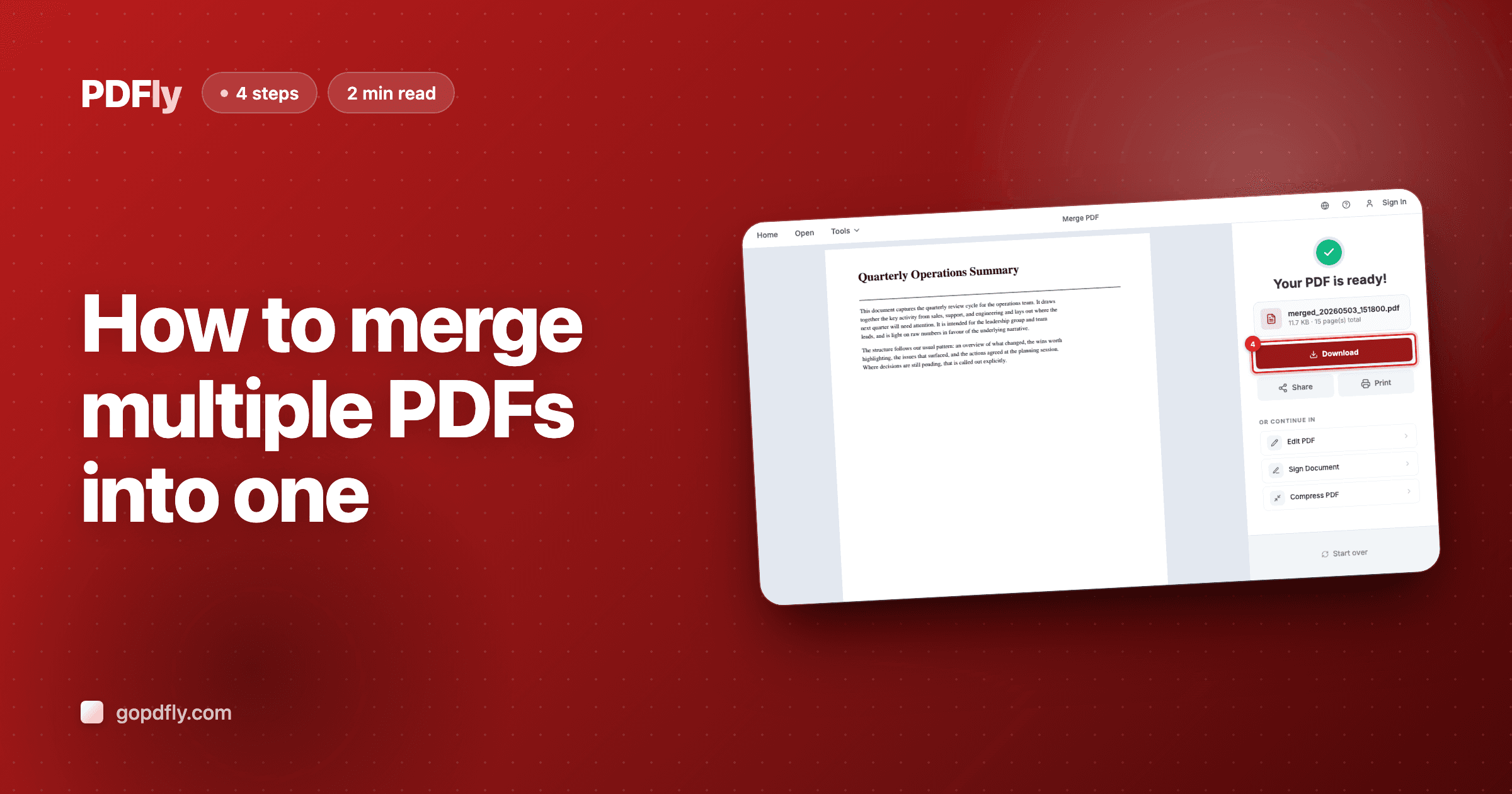
When PDFly shows the success screen, click "Download" to save your merged PDF.

When to combine Word documents into a single PDF
Sharing one PDF is simpler than sending five Word files. Recipients open one document, see your pages in the order you intended, and never have to install Word to read your work. The receiver also gets a fixed layout — fonts, page breaks and headers stay exactly as you authored them.
Common scenarios: assembling a multi-chapter contract from separate clauses, packaging a course module from multiple lecture handouts, building an expense report from per-month .docx files, or merging research notes into a single deliverable for a client.
PDF also locks in formatting in a way Word does not. If your reviewer opens a .docx in a different version of Word — or in Google Docs — line breaks and tables can shift. A merged PDF preserves the exact layout you saw before you exported it.
Tips for a clean merged PDF
Drag the file tiles to reorder them before you click Convert. The order in the file list is the order in the merged PDF — no need to rename files with prefixes like "01-" and "02-".
If your Word documents use uncommon fonts, embed them in Word first (File → Options → Save → "Embed fonts in the file"). Otherwise PDFly substitutes the closest match and your typography may shift slightly.
For very large documents, consider compressing the merged PDF afterwards — file sizes grow quickly when you combine multiple Word files with embedded images.
PDFly online vs. doing it manually in Word
You can technically achieve the same outcome by exporting each Word document to PDF (File → Save As → PDF) and then merging the resulting PDFs in a separate tool. PDFly collapses both steps into one round-trip, which matters when you have more than two or three files.
For one-off tasks of two short documents, Word's built-in export is fine. For repeated batches, Word's lack of a multi-file PDF merge means you're juggling intermediate files — that's where this flow saves real time.
If you work with sensitive contracts and prefer to keep files entirely off external servers, PDFly's desktop app does the same conversion locally. The download CTA on the right links to the Microsoft Store version.