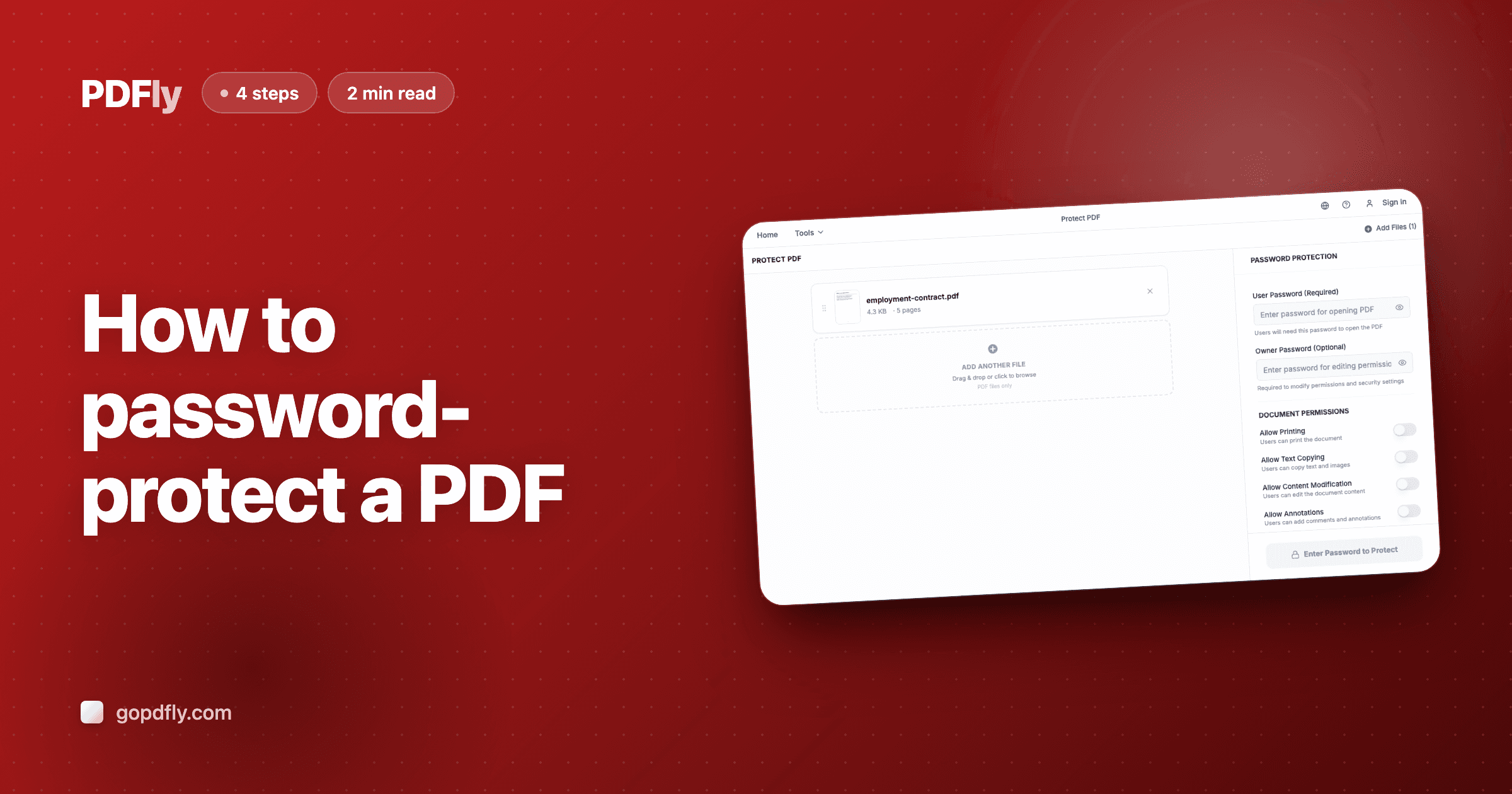
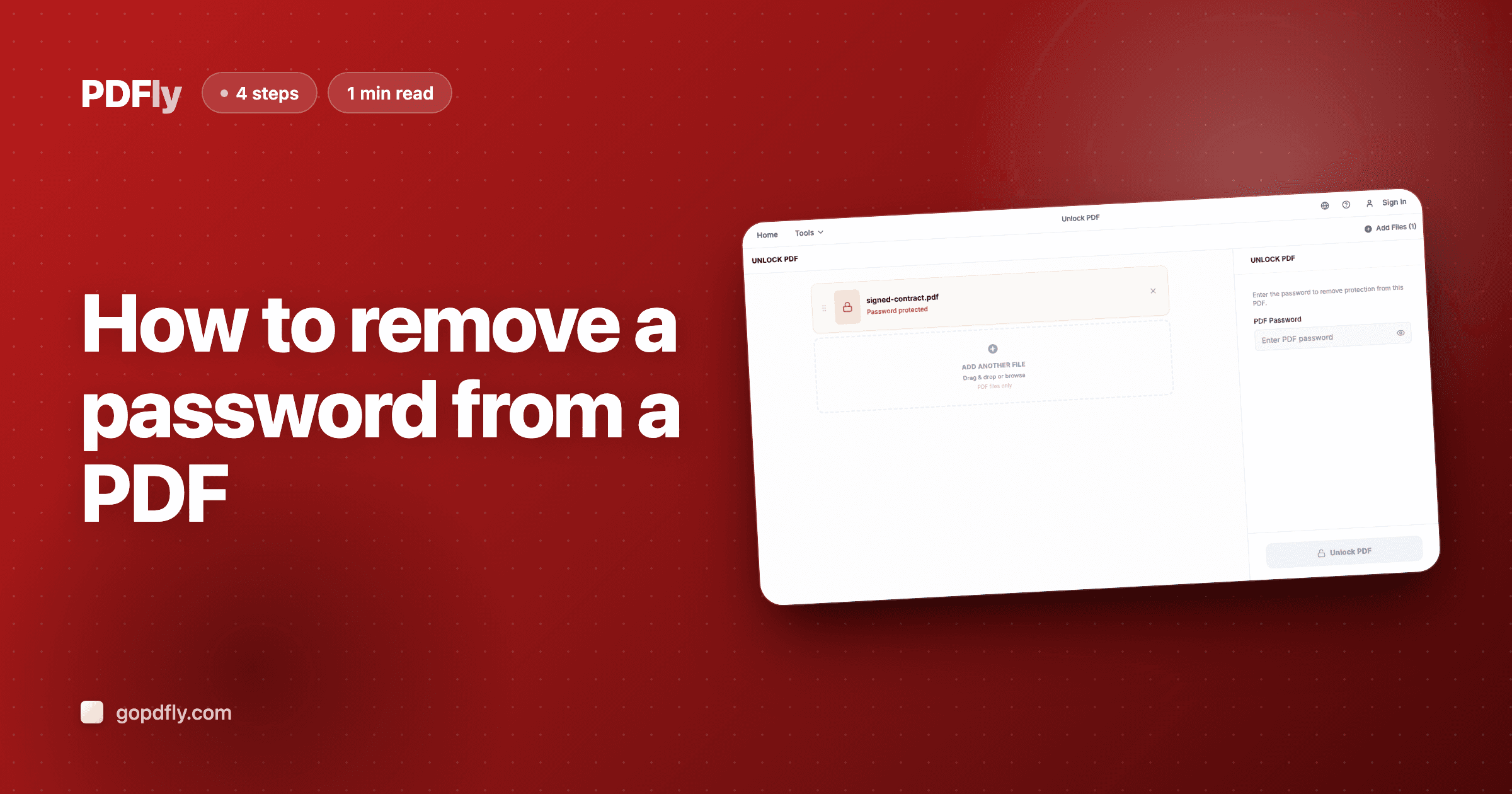
PDFs aren't just frozen layouts — every photo and graphic inside one is still stored as a real image, just locked behind the page. PDFly's Convert tool can pull all of them out at once, naming each file and giving you them as JPG or PNG.
This is the workflow you want when a designer hands you a PDF mockup and you need the raw assets, when you've scanned old prints into a single document and want them back as files, or when you're rebuilding a presentation from a PDF export.
Extracting embedded images from a PDF is a PDFly Premium feature.
- 1
Step 1 — Open the Convert tool
Open the Convert tool. You'll see the upload screen titled "Convert PDF Files".

- 2
Step 2 — Upload your PDF
Click "Choose Files" and pick the PDF that contains the images you want extracted. Any PDF works — brochures, scanned documents, design mockups, presentations.

- 3
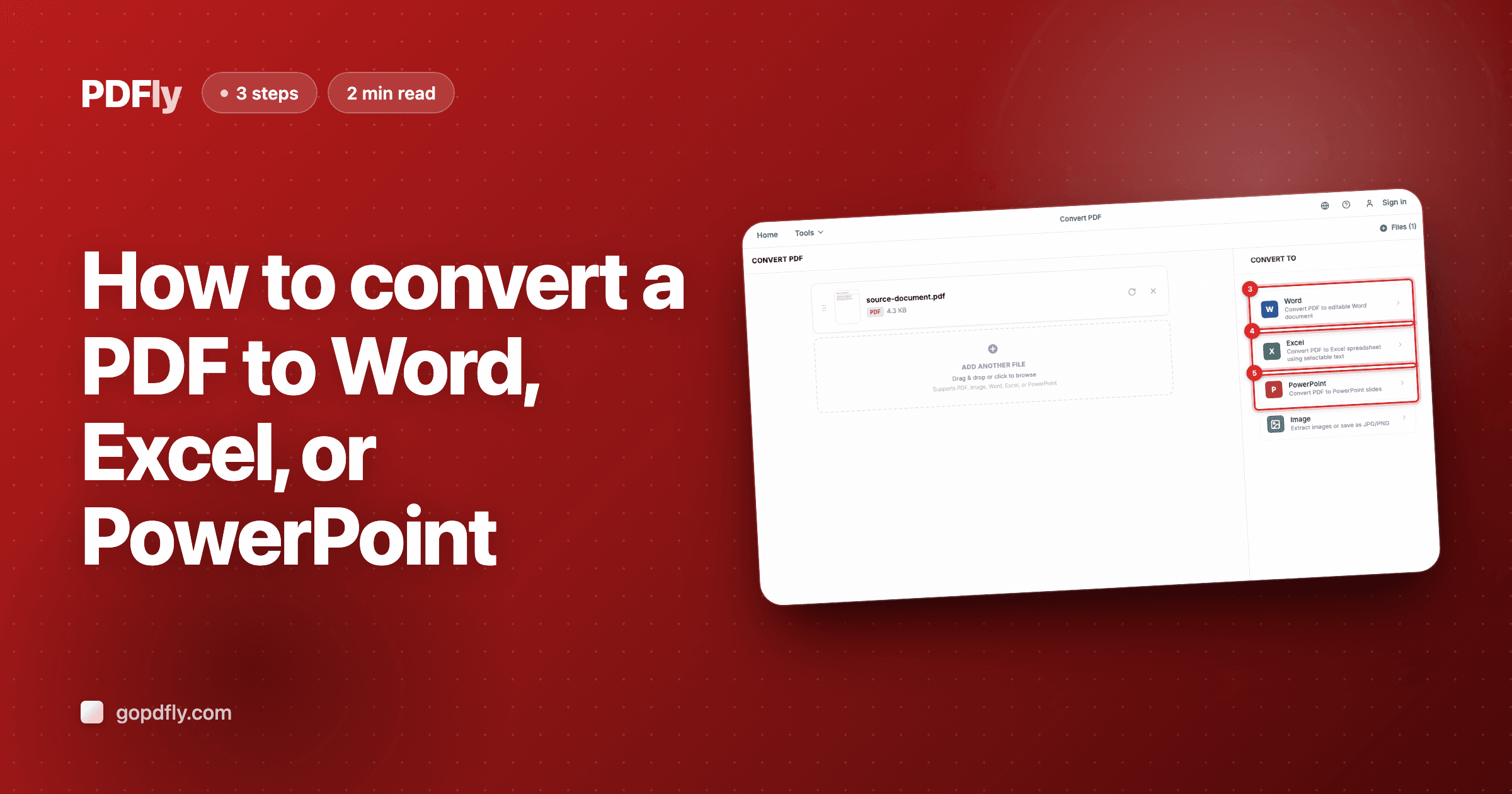
Step 3 — Pick the Image format
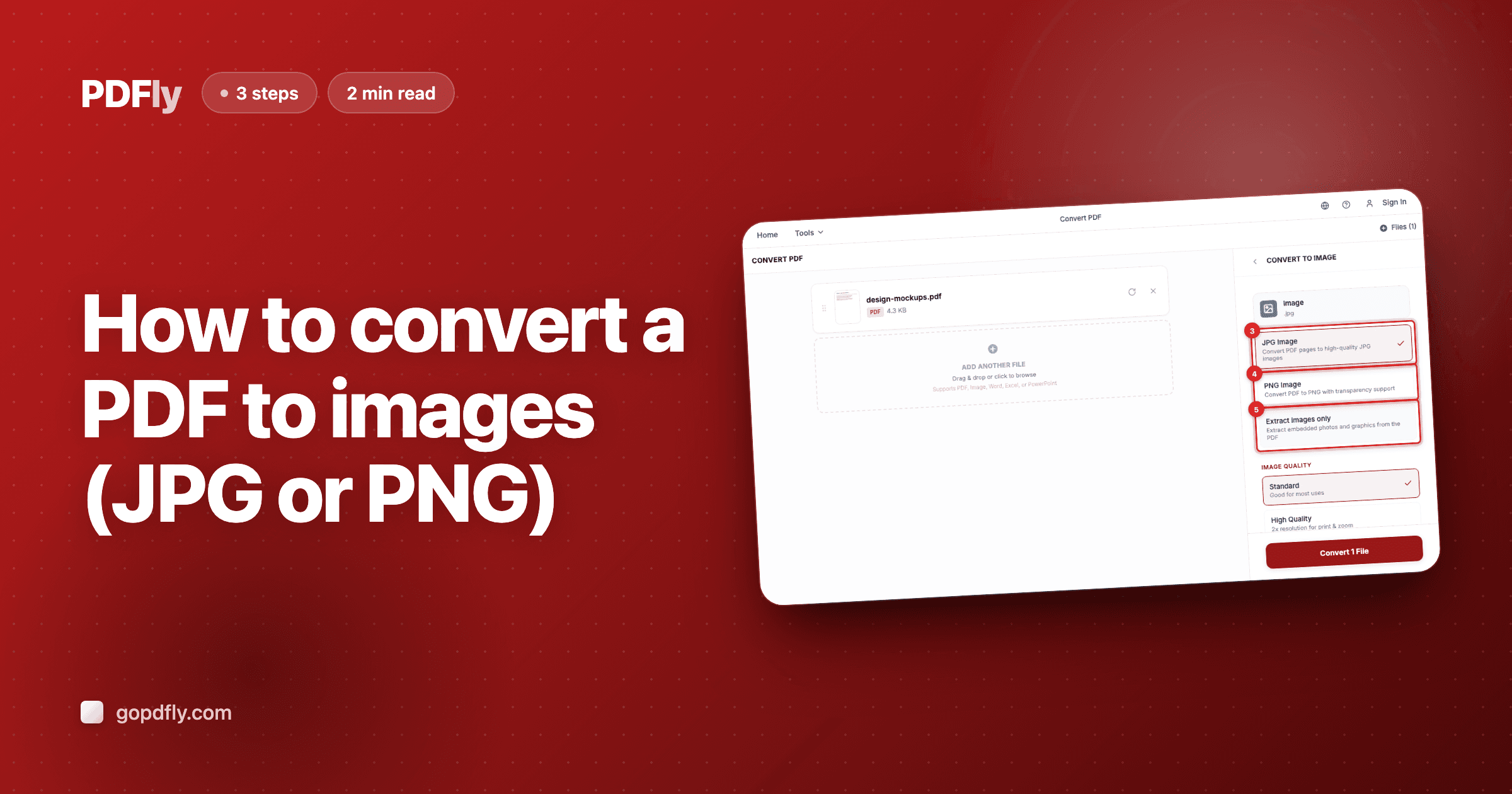
In the sidebar, click the "Image" format. PDFly will reveal three sub-options: JPG, PNG, and "Extract images only".

- 4
Step 4 — Choose "Extract images only"
In the same sidebar, click "Extract images only". This switches the conversion mode from "render each page as an image" to "pull the embedded images out as separate files".

- 5
Step 5 — Run the extraction
Click the convert button at the bottom of the sidebar. PDFly walks the PDF for embedded image XObjects, renames each one, and packages the result — usually a few seconds for a typical document.

- 6
Step 6 — Download the extracted images
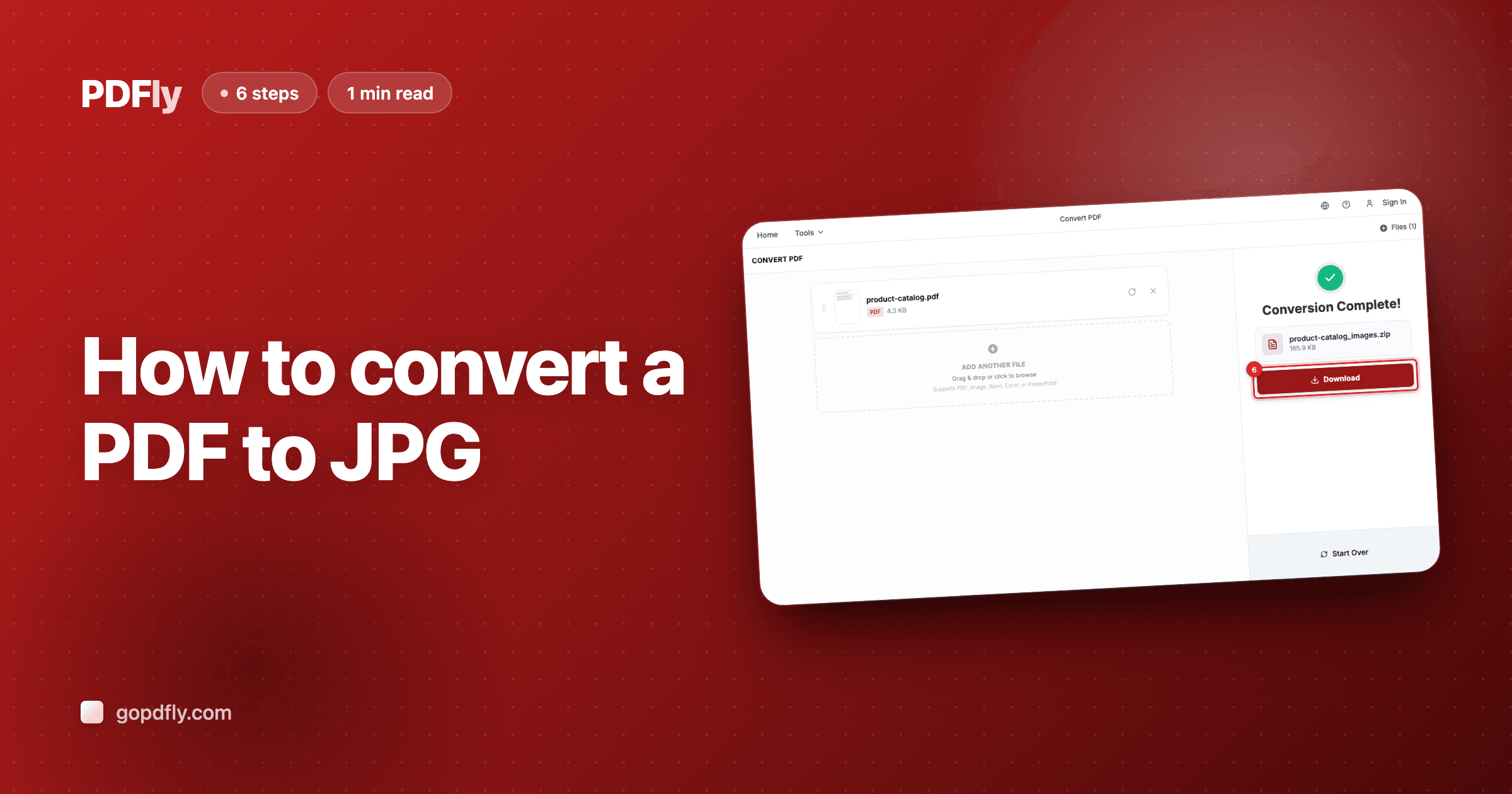
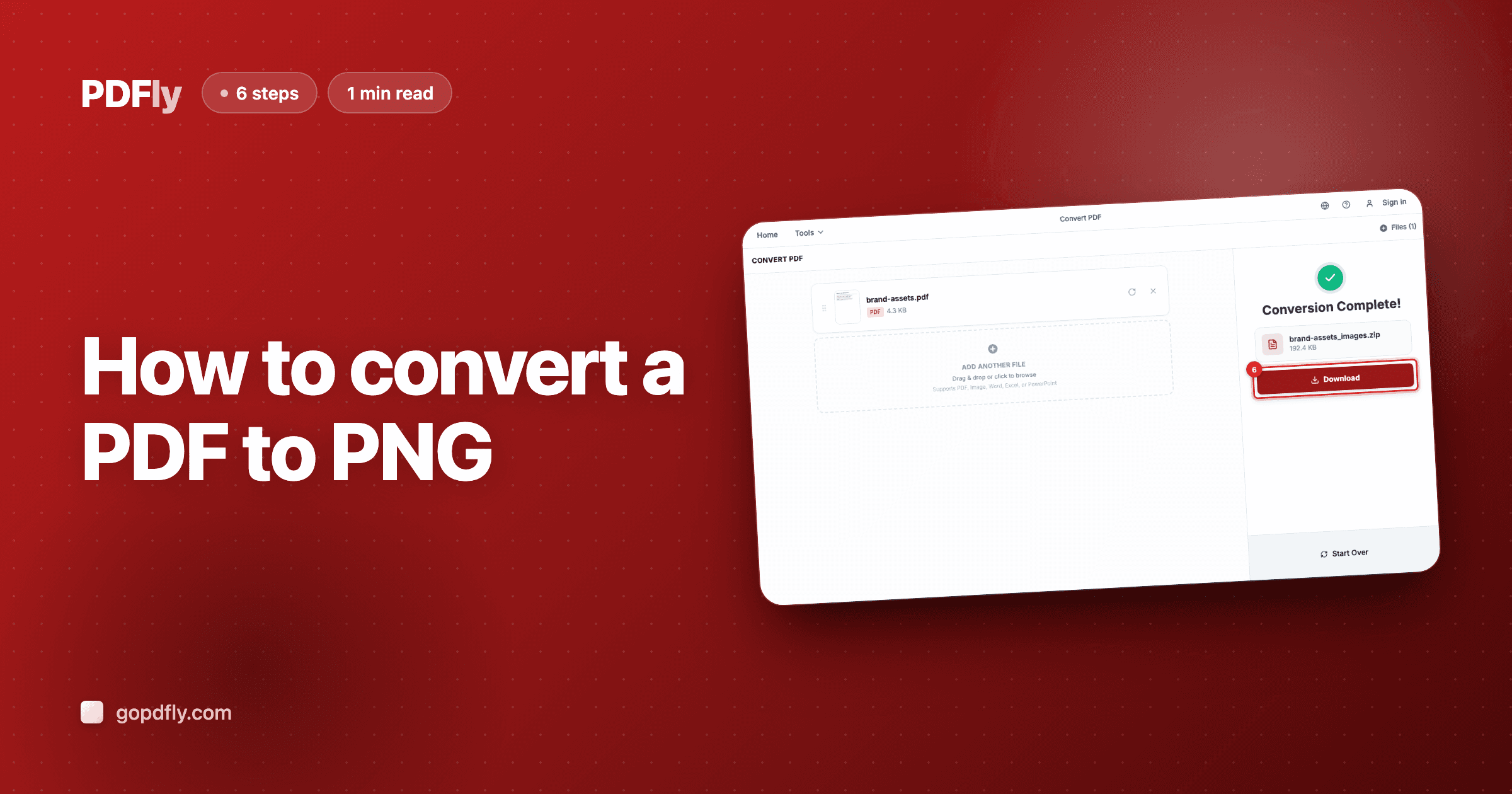
When the extraction finishes, every image appears in the result panel. Click "Download" to grab them all at once as a ZIP, or download individual images one by one.

When this is useful
The most common case is rebuilding a presentation, web page, or document from a PDF you only received as a final artefact — say a brochure or annual report — and the original assets are gone or stuck on someone else's machine. Pulling the images out gets you 80% of the way there in seconds.
It also works on scanned multi-page documents: each scanned page becomes a separate image file you can re-OCR, edit, or print individually. Designers use this for swiping reference imagery from research PDFs, while marketing teams use it to lift product photos from supplier PDFs.
For sensitive PDFs you'd rather not upload, the PDFly desktop app does the same extraction locally — link in the side rail.
Tips for cleaner extractions
If your PDF was made by exporting from a design tool like Figma or InDesign, the extracted images come out at full original resolution — exactly what was placed on the page. PDFs made by scanning will give you each page as one big image; the resolution depends on the scan settings.
PDFly skips tiny images by default (under 100 px) so you don't end up with hundreds of UI icons or favicon-sized assets. The threshold is configurable in the sidebar if you actually need those.
PDFs sometimes use multiple smaller images sliced from a single original — common in scanned documents that get split into columns. The extractor returns them as-is; if that bothers you, the desktop app has a 'merge adjacent slices' option.
Output formats and quality
JPG vs. PNG: choose JPG for photos and graphics with smooth gradients (smaller files, slightly lossy), PNG for logos, screenshots, and anything with sharp edges or transparency (larger files, lossless). PDFly defaults to JPG; switch in the sidebar's output-format toggle.
JPG quality is configurable from 60% (smallest files, visible artefacts) to 95% (near-original, larger files). The default 80% is the sweet spot for most photos. Bump to 95% if you're going to print or re-edit the result.
If your PDF embedded the images as PNG originally, exporting them back as PNG keeps them lossless. JPG re-encoding will introduce a tiny quality loss either way.